A casino may operate around the clock while individual areas, services and activities follow separate availability arrangements.
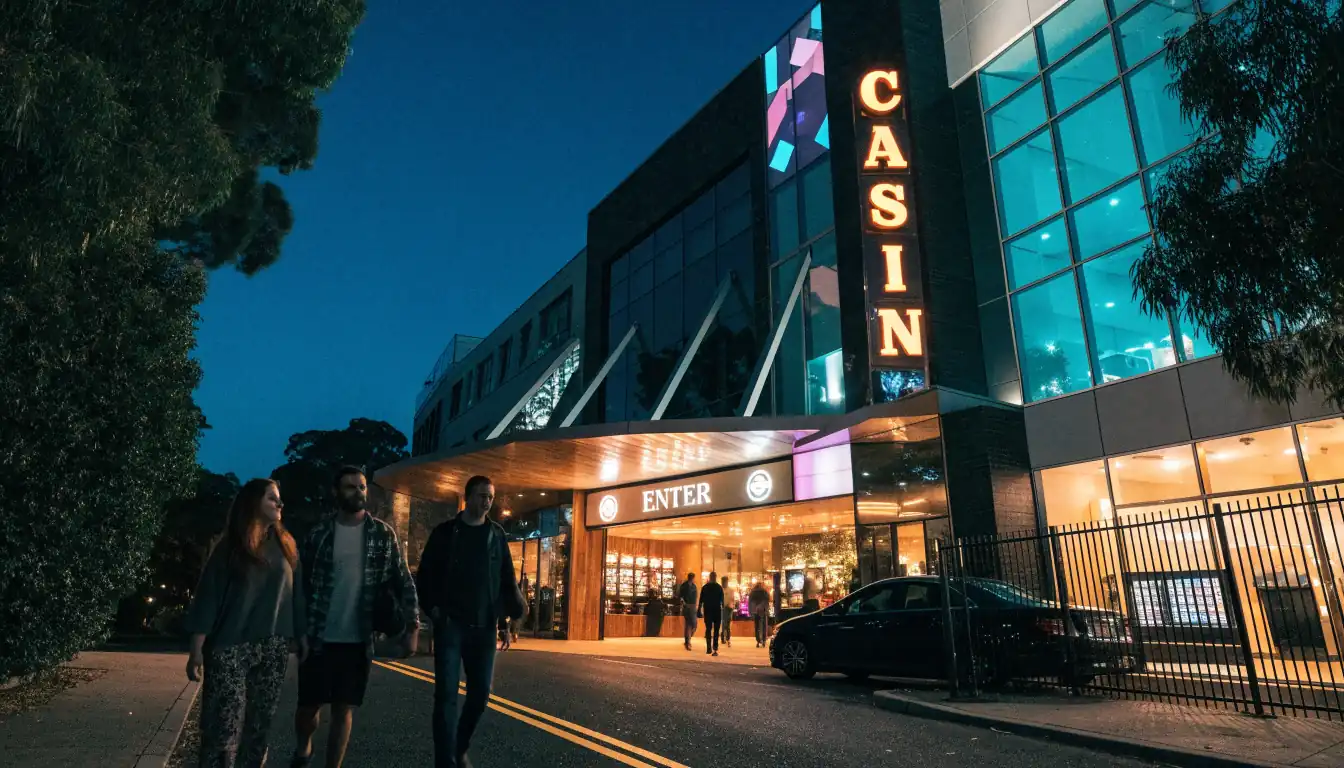
“Open now” sounds like a simple status: the doors are open, so everything inside must be available. In practice, it combines two different questions. One is whether a casino is operating as a venue. The other is whether a particular area, service or activity is available at the moment being considered. A general opening status answers the first question, not automatically the second.
All major Australian casinos operate around the clock. That is the broad starting point for interpreting an “open now” result. It does not mean that every facility within a casino has identical hours or that every service is continuously available. A venue can remain in operation while access to a particular part of it is governed by separate arrangements. The distinction is ordinary operational housekeeping, not a contradiction.
I have seen how easily the word “open” gets treated as a promise. It is usually only a statement about the venue’s overall operating status. The word does not, by itself, describe what is happening in every room or establish that a specific amenity is available. Search results and listings often compress the distinction because a short status label cannot carry the detail of a full venue schedule. Useful shorthand. Not a complete schedule.
If you’re looking for pokies to play online in Australia in 2026, this list is a starting point for reviewing the available operator details. Check the relevant terms and availability before choosing a site.
WinSpirit Casino
WinSpirit Casino lists a Curaçao eGaming licence, OGL/2024/923/0383, issued through Antillephone N.V. Its minimum deposit is A$30.
DragonSlots Casino
DragonSlots Casino is listed with a Curaçao Gaming Authority licence and is operated by Jumpman Gaming Ltd.
Vegaz Casino
Vegaz Casino lists Curaçao licence OGL/2024/1335/0780. Its minimum deposit is EUR 20.
Neospin
Neospin lists Curaçao Gaming Control Board licence OGL/2023/176/0095 and is operated by Hollycorn N.V.
Uptown Pokies
Uptown Pokies has been operating since 2017 and lists a Curaçao licence. Its minimum deposit is A$20.
7Bit Casino
7Bit Casino is operated by Dama N.V. and lists a Curaçao licence.
SkyCrown
SkyCrown lists a Tobique Gaming Commission licence. Its stated payout times are around 10–15 minutes for crypto and 1–5 days for fiat; the minimum deposit is A$30.
Kingmaker
Kingmaker lists payout times of around 90 minutes for crypto and 1–5 days for fiat. Its minimum deposit is A$30.
MrPacho
MrPacho lists crypto payout times of 30–120 minutes and fiat payout times of 24–72 hours. Its minimum deposit is A$30.
GoldenCrown
GoldenCrown lists Curaçao Gaming Control Board licence OGL/2023/176/0095 and is operated by Hollycorn N.V.
The same caution applies when a result uses “pokies” as a broad label. That wording may point towards a casino, but it does not establish that the place is a casino rather than another kind of gaming venue, such as a pub. Nor does it prove that the particular activity implied by the wording is available at that time. A phrase describing a category is not the same as confirmation of a service at a named property.
This matters because “near me” and “open now” answer different things. “Near me” is about location; “open now” is about current operation. Neither phrase supplies a detailed account of the facilities inside a venue. A result that appears close and open can still leave unanswered which parts are accessible, what entry conditions apply, and whether the listing describes the casino itself or a separate facility. The label is a starting point, not a door-by-door inventory.
For major Australian casinos, the 24-hour operating fact sets the general context, but it should not be stretched into a claim about every individual service. A casino’s overall operation and a particular facility’s availability are different layers of information. When I read venue details, I keep those layers separate: a broad operating status tells me about the property, while a specific schedule needs to refer to the relevant facility. Otherwise, a confident-sounding “open” can carry more meaning than the wording supports.
 Best Pokies in Adelaide: Checking Venue AccessLearn how to check whether an Adelaide venue’s gaming area is accessible, and why a general opening listing may not confirm pokies…
 Pokies in New South Wales: Venue Hours and AccessAn “open” listing does not confirm that a gaming area is accessible or machines are operating; this guide separates venue status from…
Entry conditions are another separate matter. Casino entry in Australia is restricted to people aged 18 or over, and valid photo identification is required for entry to all major Australian casinos. Those requirements do not change the meaning of “open now”; they are conditions that apply alongside the venue’s operating status. An open venue is not the same as unrestricted access.
The practical reading is therefore narrow. If a major Australian casino is described as open, its general operation sits within a 24-hour framework. That does not establish the current status of each facility or service, and it does not confirm that a different type of gaming venue follows the same arrangement. Keeping the wording at that level avoids the common mistake of turning a venue-wide fact into a guarantee about everything on site.
There is no special mystery in the phrase. It is simply less precise than it looks. “Open” describes the venue broadly; “available” needs to be understood in relation to the particular facility or service. Once those meanings are kept apart, the result is easier to read without assuming that one status label answers every operational question. A small distinction. A useful one.
A request for a casino open at 6am or 7am sounds precise, but the time alone does not identify what must be available. The useful distinction is between the operation of the casino as a whole and the schedule of a particular facility or service inside it. A venue may operate continuously while particular areas, counters, restaurants or other services follow their own hours.
All major Australian casinos operate 24 hours a day. That establishes a broad picture of casino operation, not a promise that every part of every property is active at every hour. I have seen how easily a general opening statement gets shortened in retelling: “open” can start to sound like “everything is available”. Those are different claims.
For someone considering an early visit, that difference matters. A casino’s general operation does not, by itself, settle whether a particular area is accessible at 6am, whether a service is operating at 7am, or whether a particular machine is available. Nor does it establish a daily cut-off for any individual facility. The same caution applies to an 8am arrival: the venue-level fact does not provide a facility-by-facility timetable.
The wording “open” is doing a lot of work. In operational terms, it can refer to the property remaining open, an entrance being in use, a particular part of the casino being accessible, or a service being staffed. A short listing may collapse those distinctions into one label. That label is not a schedule.
I would treat a stated 24-hour operation as a starting point, then separate it from the detail that determines what is actually available at the intended time. An official venue schedule or direct confirmation is the appropriate way to establish a current facility’s hours; a general description of casino operation cannot fill in that detail. This is not a technicality. It is the difference between knowing the building operates and knowing the specific service is operating.
The same reasoning applies to late-morning cut-offs and searches for a venue open until 5am or 6am. A casino that operates around the clock is not described as closing at those times, but that does not tell us when a particular facility stops operating, changes its service, or becomes unavailable. The broad fact should not be stretched into a detailed timetable.
 Pokies in Canberra: venue checks and legal contextLearn how to verify a Canberra venue’s current status, why an open venue may not have pokies operating, and what the available…
 Best pokies in Geelong: checking venue statusLearn why an online “open” listing may not confirm pokies are operating, and how to distinguish venue status from search snippets and…
There is also a jurisdictional layer. Australian casino properties operate under licences issued by the state or territory in which each property is located. That makes the licence local to the venue, rather than a single national schedule that can be applied uniformly. A national statement about major casinos cannot establish an exact early-morning arrangement for an individual property.
The practical wording should therefore stay narrow. “The casino operates continuously” is a statement about the casino’s general operation. “This facility is open at 6am” is a separate, more specific statement that needs its own current schedule. A search result, map label or broad venue description may not make that distinction clear, so it should not be read as confirmation of every service within the property.
I have found that the apparent certainty of a clock time can be misleading. The time may be exact; the thing described as open may not be. For early starts, the right question is not merely whether the casino operates, but whether the particular facility needed is scheduled to operate then. Without that distinction, “open” is too broad to answer a specific timing question.
Keep the claims separate. General operation is not a facility timetable.
A public holiday does not produce one Australia-wide answer about casino opening. Casino properties operate under licences issued by their respective state or territory jurisdictions. That local framework matters more than a national calendar when assessing whether a particular gaming floor is available on Good Friday, or whether it will remain accessible later that evening.
Attention: A general "open" status in search results may not confirm actual availability on a named holiday; always check current notices tied to the specific property and date.
The distinction is easy to miss. A search for a venue that is open today can return its ordinary operating description, a general listing, or an old notice. None of those necessarily confirms what is happening on a named holiday. The date and the venue are both essential; a national result cannot settle the arrangements for every property.
In operational terms, “open” can also refer to different things: the casino as a property, its gaming floor, or another service within the building. A holiday notice may address one facility rather than every part of the venue. Treating a general statement as confirmation for a specific area is where a seemingly clear answer becomes unreliable.
Good Friday is a particularly date-specific case. The calendar identifies the holiday, but does not by itself establish the schedule of a casino in a particular state or territory. Nor does the fact that a venue is licensed locally prove that every facility there follows the same holiday arrangement. The useful evidence is a current notice tied to that property and date, not a broad claim about Australian casinos.
The same logic applies to “tonight”. A venue’s usual pattern may not answer whether its gaming floor is available on a particular holiday evening. A result that says the property is open may refer to the broader complex, while a notice for a particular facility may give a different picture. The wording needs to be read for its scope and date.
I have seen how easily a general operating label gets repeated as a specific promise. It is not one. A licence establishes the local regulatory framework; it should not be treated as a substitute for a current venue schedule. Holiday arrangements are not settled by searching only the holiday name, or by assuming that a familiar pattern applies everywhere.
The practical check is therefore narrow: identify the exact casino, then look for a current statement about the specific date and facility. Where the property’s notice is unclear, the relevant state or territory jurisdiction provides the regulatory context. That is a more defensible basis than carrying an answer from one city or venue over to another.
There is also a boundary between physical casinos and online results. A website appearing in a search does not make it a locally licensed casino. The Interactive Gambling Act 2001 prohibits operators from providing real-money online casino games to people in Australia. The Australian Communications and Media Authority enforces federal interactive gambling rules and can ask internet providers to block prohibited services. That online regulatory issue does not confirm the holiday hours of a land-based property.
A holiday answer needs a venue and a date. Good Friday alone is not enough; “open tonight” alone is not enough either. The local licence identifies the jurisdiction, while a current, property-specific notice is what can speak to the schedule. No shortcut.
“Nearby” is a local question in a country where gambling facilities are spread across many cities. A national count can show the scale of that network, but it cannot identify the closest venue to a particular suburb or establish which facility is open at a particular moment. Those are separate checks.
More than 20 properties are reported across all eight Australian states.
Gambling facilities have been counted in 147 Australian cities.
Identified as Australia's largest gambling city with 11 facilities.
A specialist review has reported more than 20 full-scale casinos across Australia, spanning all eight states. The same type of review has counted gambling in 147 Australian cities. These figures are useful as a broad snapshot, not as a permanent register: facilities and classifications can change, and a count of cities with gambling does not mean that each city has a full-scale casino.
That distinction matters when a search names a suburb or town, such as Redcliffe. A result for a nearby gaming venue is not automatically a casino, and a national count cannot establish which property is closest to that address. Nor does the presence of gambling facilities in a city say whether a particular one offers the service being sought.
Sydney stands out in the reported city-level figures. A specialist review identified Sydney, New South Wales, as Australia’s largest gambling city, with 11 gambling facilities. That is a concentration, not a promise that every facility is a casino or that all are equally accessible from every part of the city. In practice, “closest” depends on the starting point and on what kind of venue is being counted.
I separate the map from the operating details. A venue’s location can help establish whether it is within a practical distance; its category and current access conditions still need to be confirmed independently. “Near” is not a service description. It says nothing by itself about the floor or facility a visitor has in mind.
The same caution applies to searches focused on early opening or today’s availability. A city-level figure describes distribution, not the hours of an individual property. The broad geographic picture can narrow the area in which to look, but it cannot turn a city count into a venue schedule. Distance and availability are different questions.
For a suburb outside a major centre, the national spread is only a starting point. A state-wide presence does not mean a casino is close to every town, and a reported count of gambling cities includes a broader category than casinos alone. That is why a nearby result should be read for the type of facility it names, rather than treated as interchangeable with a casino.
The figures therefore give two useful signals: casino access is spread across Australia, while facilities are not evenly distributed between cities. Sydney’s reported concentration illustrates the second point. The broad counts help put “near me” in context, but they do not settle the local answer. A map is only the first pass.
Yes. All major Australian casinos operate 24 hours a day. That is the clearest answer to whether a major casino can be open at any hour: its overall operation is not limited to a conventional daytime schedule.
There is an important distinction between a casino being open and every part of it being available continuously. The 24-hour statement applies to major casinos as operating venues; it does not establish that every service, area or activity inside a particular property runs without interruption. A venue’s general status and the availability of a specific facility are different things.
I learned to be careful with the word “open” because it can compress several separate conditions into one. A property may be operating while a particular service is not available, or while access to a particular area follows its own arrangements. The broad operating-hours fact cannot settle those details for an individual visit. That distinction matters.
Major Australian casinos operate 24 hours a day, but this general status does not guarantee that every internal service or area is available without interruption.
The same limit applies to searches for a casino operating around the clock nearby. The nationwide answer supports continuous operation at major Australian casinos, not a promise about every gaming venue, every property or every service. Nor does it identify which location is closest to a particular person. A national statement is useful for understanding the general pattern, but it is not a live status report for a named venue.
In practical terms, “24 hours” describes the operating pattern, not a guarantee that conditions remain identical from one moment to the next. It should not be read as confirmation of a specific facility’s availability. That is where broad wording stops being useful.
I would also separate the idea of continuous operation from claims that use “always open” as if it answered every practical question. It answers one: major Australian casinos operate throughout the day and night. It does not, by itself, confirm what is accessible at a particular property at a particular moment. Small distinction. Real consequence.
So, for the narrow question of whether major casinos in Australia operate around the clock, the answer is yes. For a specific venue or service, the general rule should not be treated as a detailed schedule. The two statements can both be true: the casino operates continuously, while the availability of an individual facility is a separate matter.
A broad search for Australian casinos open now can establish the national setting, but it cannot identify what is happening at a particular property. Australia’s casino industry is governed by state and territory jurisdictions. Each casino operates under a licence issued by the jurisdiction where it is located, so the national picture is not a single operating arrangement applied uniformly across the country.
That distinction matters. A national result may describe the market as a whole, while access and operating conditions belong to individual licensed properties. The phrase “open near me” also depends on location: a result spanning Australia does not become a useful local answer simply because it includes the word “open”. I have seen broad listings treated as if they confirmed a specific venue’s current arrangements. They do not.
One specialist casino review reports more than 20 full-scale casinos across all eight states. That figure is a snapshot attributed to that kind of review, not a permanent register or a guarantee that every property offers the same facilities. Counts can change as venues open, close or alter their status. The useful point is scale: casino access is a national subject, but the practical details sit locally.
The same separation applies to the word “pokies”. In everyday Australian usage it can point towards gaming machines, but a general casino listing may cover the property rather than confirm the availability of a particular facility. A result that names a casino is not, by itself, a live confirmation of every service inside it. Different question. Different level of detail.
I read national information as a map of responsibility and market scale, not as a venue schedule. The licence identifies the relevant jurisdiction; it does not turn a countrywide description into a real-time status update. A broad result can therefore be useful for understanding where authority sits and how widely casinos are distributed, while still leaving local particulars unresolved.
That is the limit of an Australia-wide answer. It can frame the market and explain why details are jurisdiction-specific. It cannot substitute for a current, property-level confirmation, and a national count should not be mistaken for a complete or timeless directory.
A late-night search can point towards a venue that remains in operation, but it does not settle what is available inside it at a particular hour. All major Australian casinos operate around the clock. That is a useful baseline for understanding late-night access, not a guarantee that every gaming area, restaurant, bar or other facility follows an identical schedule.
I learned to separate the building’s operating status from the service being asked about. A casino may be open while a particular facility has its own hours, access arrangements or operating conditions. Those details cannot be inferred from the general fact of continuous casino operation. “Open late” is useful shorthand; it is not a facility-by-facility timetable.
There is another distinction behind the wording. A venue can operate continuously without every part of its offer being continuously available. A search for late-night gaming therefore needs a more precise answer than a broad statement that a major casino stays open. The venue’s own current information is the appropriate place to confirm the details of a specific facility, especially when the visit depends on one service being available.
The same caution applies when comparing one location with another. The national operating-hours picture does not establish that every casino has the same layout, access rules or service schedule. Nor does it tell whether a particular facility is operating at the moment a person plans to arrive. Those are local details, not consequences of the general 24-hour pattern.
Licensing sits with the relevant state or territory, and casino operating conditions belong to that jurisdictional setting. So a late-night expectation should not be stretched into a claim about every venue or every part of one. The distinction is plain, but easy to miss: continuous operation describes the major casino, not necessarily each service within it.
For practical purposes, “open late” and “confirmed available now” are different statements. The first may fit the broad operating pattern of major Australian casinos. The second requires information specific to the venue and facility. That is the line worth keeping.
A casino’s ordinary operating pattern does not, by itself, settle whether a particular venue is open on Christmas Day. Holiday arrangements are a separate question: the date matters, and so does the jurisdiction responsible for the property’s licence.
Australia does not have one national casino licence setting a single Christmas schedule. Each casino operates under a licence issued by its state or territory. That makes a broad answer useful only up to a point. It establishes who governs the venue, not what that venue’s Christmas Day arrangements are.
I have seen the distinction get lost in short listings and promotional wording. “Open” can sound like a complete answer, but it may not identify the date covered or the particular property being described. For Christmas Day, a general statement about a casino’s normal operation should not be treated as confirmation of its holiday schedule. A nearby result is not enough, either: the relevant detail belongs to the specific venue and its licensing jurisdiction.
Christmas Opening
Do not assume a casino's ordinary 24-hour pattern applies to Christmas Day; holiday arrangements are determined by the specific property and its local licensing jurisdiction.
That is why the phrase “pokies open Christmas Day near me” cannot be answered reliably as a single Australia-wide rule. The wording points to a local decision, while the national context only supplies the regulatory framework. A state or territory licence is the starting point for understanding which authority governs a casino; it is not, on its own, a calendar of that venue’s holiday hours.
The careful reading is simple. A general description of casino operations and a Christmas Day schedule are not interchangeable. Nor does an answer for one property establish arrangements at another property in a different jurisdiction. Christmas is a date-specific case, so only information tied to the particular casino and the relevant date can resolve the practical question.
No national shortcut.
Anzac Day opening cannot be settled by a single Australia-wide answer. A casino operates under a licence issued by the state or territory where it is located, so the relevant jurisdiction matters when considering a particular venue’s arrangements.
That structure is important, but it does not supply a date-specific timetable. A national statement about casino licensing does not establish whether a named property will admit guests on Anzac Day, or what hours a particular facility may keep. Those are separate details, and treating the licence itself as a holiday schedule would be a mistake.
I have seen broad opening claims do too much work. “Open” can sound like a simple yes or no; in practice, it is only useful when tied to the venue and the date. Without a confirmed Anzac Day schedule for that property, a general description of Australian casinos cannot resolve the question. No universal answer.
The same limit applies to someone looking for nearby gaming venues. Proximity narrows the location, not the evidence about that venue’s holiday arrangements. The state or territory licence provides the regulatory setting; it does not justify assuming that every casino follows one national Anzac Day pattern.
So an answer about Anzac Day needs to be specific to the casino and its jurisdiction. A broad claim that casinos are open, or closed, across Australia would go beyond what the licensing framework establishes. The date alone is not enough to confirm a venue’s hours.
A venue’s casino licence establishes that it operates under the rules of its state or territory. It does not, by itself, confirm which payment methods are available at a particular gaming floor, or whether cheques are accepted. Those are service details, not consequences that can be inferred from licensing.
I have seen “cash accepted” used as if it answered every practical question. It does not. The phrase may say nothing about cheque handling, cash access, or the arrangements in place at a specific venue. Without a current, venue-specific statement, claims about those services should not be treated as settled. Separate the licence question from the payment question. They are not the same check.
Ratings need the same care. A high score may describe a hotel, restaurant, or overall visitor experience rather than the casino itself. A ranking can also depend on who collected the reviews, what was rated, and when. A star count without that context is a weak basis for comparing venues, and it cannot establish a particular facility’s services.
The licensing framework is local: each Australian casino holds a licence issued by the relevant state or territory. That gives a clear way to understand a venue’s regulatory status, but it does not certify every claim attached to its name online. “Top rated” is a label, not a regulatory category. Nor does it prove that cash or cheques are handled in a particular way.
For a sound comparison, the claim needs to match the thing being assessed: the casino rather than the hotel, and the payment arrangement rather than the venue’s general reputation. If the detail is not tied to the specific property and service, it remains unconfirmed. No shortcut.