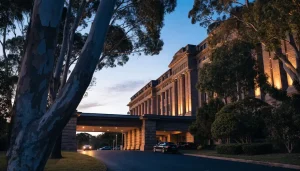
This guide separates accommodation, dining, parking and entertainment searches from questions about online play and venue facilities.

A request for a casino hotel in Western Australia can mean two different things: a room at a property associated with a casino, or a place to stay while visiting one. I keep those questions separate. The first depends on whether a particular venue operates accommodation; the second is about the surrounding area and belongs to a broader accommodation comparison. Neither wording alone confirms that a hotel is attached to a casino or that rooms are available.
That distinction matters when a page uses “casino hotel” as a broad label. It may describe a property, a package, or simply a traveller’s intended destination. Before treating a room as part of a casino stay, the basic details need to line up: the named accommodation provider, the address, the room category, the dates covered and the booking conditions. If those details are not clear, the label is doing more work than the offer.
I have seen “deal” used as if it meant a lower room price, when the actual terms can be narrower. A package might bundle accommodation with another benefit, apply only to selected dates, or require a particular booking route. The word is not the condition. The condition is the condition.
Choosing an online casino from Western Australia calls for checking the details that matter to you, including licensing, deposit requirements and payout information. This list offers a concise reference to the available facts for each operator.
WinSpirit Casino
WinSpirit Casino lists a Curacao eGaming OGL license, issued through Antillephone N.V. Its minimum deposit is A$30.
DragonSlots Casino
DragonSlots Casino is listed under the Curacao Gaming Authority, with Jumpman Gaming Ltd as the operator.
Vegaz Casino
Vegaz Casino lists a Curacao OGL license. Its minimum deposit is EUR 20.
Neospin
Neospin lists a Curacao Gaming Control Board OGL license, with Hollycorn N.V. as the operator.
Uptown Pokies
Uptown Pokies has been operating since 2017 and is licensed in Curacao. Its minimum deposit is A$20.
7Bit Casino
7Bit Casino is licensed in Curacao and operated by Dama N.V.
SkyCrown
SkyCrown lists a Tobique Gaming Commission license and a minimum deposit of A$30. Its stated payout times are around 10–15 minutes for crypto and 1–5 days for fiat.
Kingmaker
Kingmaker lists a minimum deposit of A$30. Its stated payout times are around 90 minutes for crypto and 1–5 days for fiat.
MrPacho
MrPacho lists a minimum deposit of A$30. Its stated payout times are 30–120 minutes for crypto and 24–72 hours for fiat.
GoldenCrown
GoldenCrown lists a Curacao Gaming Control Board OGL license, with Hollycorn N.V. as the operator.
For a Western Australian casino hotel deal, the useful comparison is not simply the headline price. It is what the rate includes and what can change the final cost: cancellation rules, payment timing, taxes or fees where applicable, and restrictions attached to the offer. These must be read from the booking terms rather than inferred from a promotional phrase. If a benefit is described without explaining how it is claimed, its practical value is uncertain.
Room availability is equally date-specific. A general hotel page may describe room types without showing that any of them can be booked for the intended stay. Availability, room features and rates can change, so a description should not be mistaken for a confirmed reservation. I would treat the room category, dates and final booking summary as one transaction, not three separate promises.
There is another ambiguity in “hotel near a casino.” Near can refer to a short walk, a short drive or simply the same broad destination. Without a named property and a verified address, the phrase does not establish distance or transport convenience. I would not infer either from a map pin or from an image that presents a hotel and casino together. The actual route and the accommodation’s location need to be checked independently.
Casino opening hours are a separate detail from hotel access. A hotel may have its own arrival and reception arrangements, while a casino floor or other venue area can operate on a different schedule. A search for casino hours does not confirm that a particular venue is open at a particular time, and a room reservation should not be read as proof of access to every facility. Current venue information is the relevant reference for hours; booking terms govern the stay.
For practical planning, I would verify the property name and address first, then compare the room details and booking conditions for the chosen dates. Only after that does a package label become meaningful. If the listing does not make clear who provides the room, what the rate covers or which restrictions apply, it is not yet a reliable basis for choosing a stay.
The phrase “best casino hotel” sounds decisive. In practice, it compresses several separate decisions: whether the property is genuinely connected to a casino, whether a room is available, whether the terms suit the trip and whether the venue’s current schedule matches the plan. A careful booking keeps those claims distinct. Less assumption, fewer surprises.
“Accommodation near the casino” and “casino hotel accommodation” sound interchangeable, but they describe different booking decisions. The first is about finding a place to stay within a useful distance of a venue. The second asks whether the casino itself operates hotel rooms, and what those rooms include. A search phrase cannot establish that a particular property exists, is open, or has rooms available.
I learned to separate those requests before comparing prices. A nearby hotel, apartment or other stay is an independent accommodation choice; proximity does not make it part of the casino or give it access to casino room packages. A casino hotel, by contrast, is a specific property whose room inventory, inclusions and booking rules need to be confirmed directly. The distinction is plain. The labels are not.
For Western Australia, the phrase “accommodation near the casino” does not identify a suburb, a particular venue entrance or a reliable travel time. Nor does “Western Australia casino location” settle which property a person has in mind. State-level wording is too broad to support a practical distance comparison. A map pin and the exact property name are the starting points; without them, claims about what is “nearby” can be misleading.
“Deals” requires the same care. A room rate might be offered by a hotel, a booking platform or a venue, and the word alone says nothing about what is included. It does not confirm a casino credit, dining benefit, cancellation flexibility or a lower total cost. I have seen promotional language do its work in the headline, while the restrictions sit elsewhere. The useful comparison is the final booking price and its terms, not the adjective attached to it.
A casino accommodation promotion also needs to be distinguished from a general hotel offer. The name may suggest a bundled stay, but the booking conditions should make clear who provides the room, what the offer covers and whether dates or availability are restricted. If those details are unclear, the promotion is not a dependable basis for choosing a stay.
The practical approach is to identify the venue first, then compare accommodation by property name and location rather than by broad regional wording. Confirm the address, map position, room type, total price and booking conditions with the accommodation provider. A nearby stay can be the better fit even when it is not casino-operated; a casino-branded room is not automatically the better value. Different products. Different terms.
This also keeps venue information separate from lodging information. A venue’s location does not prove that it has a hotel, and a hotel listing does not confirm a relationship with a casino. Search phrases that combine “casino,” “accommodation” and “deals” are useful as a description of intent, not as evidence of a particular arrangement. The distinction matters most when a booking depends on the room being on-site, or when a package is being compared with a standalone stay.
Parking, bingo, dining and online play can sit together in a search for a casino in Western Australia, but they are separate practical questions. A parking enquiry concerns access to a physical venue; a dining enquiry concerns food on site; bingo is a distinct activity; and an online casino search concerns gambling services delivered over the internet. One phrase does not confirm that a particular venue provides all, or any, of them.
I have seen how broad labels can make unrelated information look like one offer. “Casino experience” may sound comprehensive, but it does not establish whether parking is available, whether valet parking operates, or whether bingo or dining is offered. Those details need to be checked with the venue itself before travel or planning. No assumption should be made about availability from the wording of a listing.
The same distinction matters for online casino access. An Australian-run business cannot lawfully provide online casino games to people in Australia under the Interactive Gambling Act 2001. A page or game lobby that can be viewed from somewhere else does not show that the service is lawful for a person physically in Western Australia. The location of the player matters.
Lawful Access
Under the Interactive Gambling Act 2001, it is unlawful for operators to provide real-money online casino games to people physically located in Australia.
Online operators may use region blocking to apply that boundary. The system can read the IP address used to connect and infer the player’s geographic location. If the location is excluded, games may not appear in the lobby. A specialist review has also reported that a game may fail to load because of a regional restriction; a loading error is not, by itself, proof of a technical fault or an invitation to bypass the restriction.
A VPN can make an internet connection appear to come from another country, but using one to reach region-blocked pokies sites breaches the operator’s terms of service and may result in account suspension. It does not change the player’s physical location or make prohibited services lawful. That distinction is easy to lose when access appears to work. Access is not authorisation.
For someone comparing a physical casino with online options, the sensible dividing line is straightforward: venue information relates to an in-person visit, while online casino services are subject to Australia’s prohibition on operators providing those games to local customers. Search results can mix the two, but the legal position does not change with the wording or location of a page.
Parking arrangements, including any valet service, should be confirmed directly before setting out; the same applies to whether bingo or dining is available at a particular venue. These are ordinary venue checks, not evidence of online gambling access. Keeping the questions separate avoids mistaking a travel detail for a service offer—or an online listing for lawful local access.
That is the practical distinction. Physical access, venue amenities and online gambling are not interchangeable, even when a single search page places them side by side.
A venue contact search can mean several different things: a general telephone number, a department handling bookings, or a way to confirm a detail before travelling. I learned that a single “contact” label is not always enough. The useful distinction is the purpose of the enquiry. A question about a bar, a concert or a table game may need a different answer from a general reception question.
For a Western Australian casino, contact details should be checked against the venue’s own current information before they are used. Search listings can be out of date, and a number shown for one department may not handle another. I would look for the venue’s official contact page and check that the address and department match the enquiry. No mystery. Just the right desk.
Bar searches are often about more than whether a venue has a bar. They can concern the type of setting, service times, reservations, age requirements or access during an event. Those details can change, and a listing alone does not establish what is operating on a particular date. Where a bar is part of a wider venue, its arrangements may also differ from those of the main gaming floor. A direct, specific enquiry is more useful than assuming that one general venue description answers every question.
Concert enquiries work the same way. An event page, if available, should be read for the date, venue area, ticket arrangements and any entry conditions; an old announcement is not a current programme. I have seen the practical confusion that follows when “concert at the casino” is taken to mean that every part of the property has the same access rules. It may not. Event access and casino access are separate matters.
Questions about baccarat or craps also need to be kept distinct from general contact enquiries. A game name in a search does not establish that a particular venue offers it, or that it is available at the time of a visit. The useful questions are specific: whether the game is offered, where its current rules are displayed, and what entry or identification requirements apply. For poker-machine gambling in a venue, identification requirements matter; age and access rules should be confirmed through the venue’s official information.
A map can help with orientation, but it is not a substitute for confirming the correct entrance or destination. A casino complex may have more than one public-facing area, and event, bar and gaming access need not share an entrance. Parking questions are best handled separately from entertainment enquiries: a map may show an approach route, but it does not by itself confirm current parking arrangements.
In my experience, the clearest enquiry gives the department a subject and a date, rather than asking only whether “the casino” is open or available. That small distinction limits crossed wires. Practical, not glamorous.
Breakfast and buffet searches combine two different questions: whether a casino is associated with a place to stay, and whether a particular meal is available to guests or visitors. The wording alone cannot settle either point. A breakfast listing may refer to a hotel, an independent dining venue or a package condition; “buffet” may describe a past offer rather than a current service. Those distinctions matter before making plans.
I learned to read hospitality wording literally. “Resort” can sound like a single, all-inclusive product, but the label does not establish what facilities are operating, what a room rate includes or whether breakfast is part of a stay. A buffet breakfast is a specific meal arrangement, not a synonym for any breakfast service. Availability, serving times, booking rules and prices need confirmation from the venue responsible for the service. No assumptions from a search snippet.
The same care applies to rewards. A venue loyalty programme and an online casino bonus are not the same thing, even when both use words such as “points,” “member” or “free.” Rewards may refer to accommodation or other venue benefits; an online promotion may instead be tied to gambling conditions. The label is the sales layer. The terms are the mechanism.
In Australia, the Interactive Gambling Act 2001 prohibits operators from providing real-money online casino games, including pokies and table games, to people physically in the country. That legal boundary is important when a rewards offer leads to online free spins: such language should not be read as evidence that an online casino service is lawfully offered to Australians. Nor does a bonus headline explain what happens to winnings.
Where free-spin winnings are offered by an online operator, withdrawal can depend on wagering conditions. A report by psu.com describes requirements in a range from 20 to 50 times the winnings; that is a report, not a universal term. A separate specialist review reports a 30-times wagering condition. These figures should not be blended into a supposed market standard. The operator’s actual terms, if the service is lawful where the customer is located, determine the applicable rule.
Attention: "Free" spins often involve wagering conditions that must be met before winnings can be withdrawn.
The practical point is that “free” may describe the initial spins, not unrestricted cash. Conditions can govern how winnings are played through before withdrawal, and the promotional headline may leave those conditions out of view. I have seen the headline do the heavy lifting. The small print decides.
For anyone comparing a casino resort stay or breakfast offer, the useful evidence is the current venue information: what is included, who provides it and whether the arrangement applies to the dates being considered. For a rewards scheme, separate hospitality benefits from gambling promotions before assigning value to either. A buffet listing does not confirm a room package; a membership label does not establish that a bonus is available or suitable. Clear terms first. No guesswork.
Opening status, event listings, recruitment and development are separate kinds of venue information. They change on different schedules, so a single page or old review may not answer all four. I treat each as a current operational question, not as evidence that a particular venue is open, hiring, staging an event or undertaking a project.
An “open” listing can refer to the venue generally without confirming every service or area is operating at that time. A reopening search may follow a temporary closure, a refurbishment or a change in access; the wording alone does not establish which. For a reliable picture, the useful distinction is between a dated status update and a standing listing that may have been copied forward. Details can shift. Quickly.
Events have their own timetable. A concert announcement, for instance, is not the same thing as a complete calendar, and an old event page can remain visible after the date has passed. The practical checks are the event date, whether the listing is current, and whether any conditions have changed. Entertainment enquiries belong to this category; they do not confirm regular programming or a particular schedule.
Employment searches are different again. A venue may have roles open at one point and none at another, while general careers information can remain online between recruitment rounds. A role listing is meaningful only in its current context, including its closing status and the position described. It should not be read as proof of ongoing vacancies.
Development searches need an equally careful distinction. A proposal, public discussion, planning step and completed project are not interchangeable. A headline about a possible change does not establish that work has been approved or begun. I look for the status attached to the claim and its date before treating it as a description of what exists now. No inference from a headline.
Reviews are useful for understanding someone’s past experience, but their dates matter. Comments about opening arrangements, event quality or facilities may describe conditions that have since changed. A review is not an operating notice, recruitment listing or project update.
Menu information is another practical detail, but it belongs to restaurant enquiries rather than opening-status or development checks. Menus and service details can change independently of a venue’s general status, so one should not be used to infer the other.
For anyone assessing a Western Australian casino, the sensible approach is to keep these questions separate: whether the venue is currently operating, what events are scheduled, whether roles are advertised, and what stage any development has reached. That avoids turning a search result into a claim it cannot support—and avoids treating yesterday’s information as today’s.
A request for a restaurant connected with a casino is a venue question. It concerns food served at a physical property: whether a restaurant is part of the venue, what it serves, and whether it is operating when a visit is planned. The phrase “casino restaurant” can sound like a confirmed amenity, but the wording alone establishes no venue, menu or service. I have seen how easily a category label turns into an assumption. It is not confirmation.
That distinction matters when looking for restaurants associated with a casino in Western Australia. A result may refer to a restaurant inside a casino, a separate business nearby, or a general directory entry. Those are different arrangements. A name or location attached to a listing should be checked against the venue’s own current information before it is treated as definitive. Practical details such as menus and service times can change; an old listing can remain visible after the underlying information has moved on.
“Dining options” is often promotional shorthand. In practice, it tells little unless the actual venue, offer and operating details are clear. The same applies to rooftop dining: a search for a rooftop restaurant does not establish that a particular property has one. Nor does the word “restaurant” guarantee table service, a particular cuisine or walk-in availability. Those specifics belong to the venue’s current information, not to an assumption drawn from the casino label.
There is also a separate meaning behind casino-related searches. A person may be looking for online pokies or other casino games, rather than a place to eat. These are not interchangeable services. Under Australia’s Interactive Gambling Act 2001, operators must not provide real-money online casino games, including slots, poker and table games, to people physically located in Australia. A restaurant enquiry relates to physical hospitality; it should not be read as an invitation to access online gambling.
I keep the distinction simple: establish whether the question is about a meal at a physical venue or about online play, then assess the relevant information on its own terms. A restaurant listing cannot verify gambling services, and a casino’s name in an online result does not establish a dining facility. No inference carries across.
For a useful venue check, the details that matter are specific: the restaurant’s own name, its relationship to the property, the current menu, and the service information published by the venue. If those particulars are absent or inconsistent, the sensible conclusion is that the listing needs confirmation—not that a facility or offer exists. That is less dramatic than a “best” claim. More reliable, too.
An address is the first practical detail to settle, but “a casino in Western Australia” is not a single destination. The phrase can refer to a particular venue, a hotel, or a broader area. I would not treat a result that matches the words as confirmation that it identifies the intended property. The venue’s own current information is the sensible place to confirm its street address before arranging travel.
Spa searches need the same distinction. A request for a casino spa or day spa describes a facility someone hopes to find; it does not establish that a particular venue has one, what treatments it offers, or whether it is taking bookings. Those details can change, and a third-party listing may not reflect the venue’s current services. “Resort” is a marketing label, not a facilities list.
Bars are another separate practical question. A bar-related result does not establish the number of bars, their location, entry conditions or service times. I would confirm those details against the venue’s own information rather than infer them from photographs or an old directory entry. The distinction matters. A polished image can outlive the arrangement it depicts.
Dress-code searches are best handled as a venue-policy check, not as a general rule for every casino in the state. Requirements may differ by area or occasion. A broad claim that a particular outfit is acceptable—or prohibited—without a current policy to support it can leave someone with the wrong expectation at the door. Check the relevant venue’s stated requirements before setting out.
Careers searches also need to be kept separate from gaming information. A casino-related job search may lead to roles in hospitality, administration, security or other areas, but a search phrase does not confirm that any position is open. Current vacancies and application instructions belong to the employer’s own recruitment information. A generic listing can be out of date.
“Casino games” can mean games available at a physical venue, or online casino-style games. Those are not interchangeable. Under the Interactive Gambling Act 2001, operators must not provide real-money online casino games, including pokies and table games, to people physically in Australia. That legal distinction is important even when a result uses familiar casino language. No online offer should be inferred from a venue name.
I have found it useful to separate the destination question from the amenity question: confirm which venue is meant, then verify its address, spa, bars, dress requirements or vacancies individually. One label does not answer all five.
Food-related searches can mean different things. Someone looking for food at a casino may want a quick meal, a place to sit between activities, or simply confirmation that food is served on site. A food-court search is narrower: it suggests several food options grouped in a shared area. Neither phrase, on its own, confirms that a particular Western Australian casino has a food court or any specific food service.
I treat those as separate details when checking venue information. “Food available” does not establish a food court, and a listing for a food court would not tell me what is open, what is served or whether access is restricted to guests. Those particulars can change, so a dated venue page or direct confirmation is more useful than an old directory entry. Small distinction. Practical one.
Pool searches need the same care. A casino pool could mean a hotel amenity, a recreational facility or simply a feature someone expects to find at a resort-style property. The wording does not establish that a pool exists, whether it is indoors or outdoors, or who may use it. I would look for a current venue description that explicitly identifies the facility and its access arrangements, rather than infer it from the casino’s name or its broader branding.
Food, food-court and pool details belong to the physical venue, not to online gambling. That distinction matters: the Interactive Gambling Act 2001 prohibits operators from providing real-money online casino games, including pokies, to people in Australia. A venue amenity and an online service are different questions.
In my experience, the useful answer is not the most polished label but the precise service being described. A food listing, a shared dining area and a pool are not interchangeable amenities. If a venue’s current information does not specify one, it should not be treated as confirmed.
A search for a poker room or tournament at a casino in Western Australia points to a specific kind of live-play enquiry. It does not establish that a venue has a dedicated poker room, runs scheduled tournaments or accepts entries. Those details need confirmation from the venue itself; a phrase appearing in search results is not an operating schedule.
I have seen how easily venue terms can be read as promises. “Poker” may refer to a table game, a tournament, a room, or online play. Each means something different operationally. A tournament, for instance, would need its own entry information and event conditions; the word alone says nothing about dates, format or availability. Nor does a request for casino rooms confirm that poker is played in a separate room. No inference should be drawn from the wording.
The same restraint applies to searches combining a casino with a sports bar or asking whether a venue is open today. These are practical venue questions, but they do not verify that a sports bar exists or establish current opening status. Hours and facilities can change, so an old listing or an undated mention is not a reliable basis for a visit. Keep the question narrow: whether the particular service is operating, and when.
Poker played in a physical venue is different from online gambling. The legal position for online casino-style games in Australia is especially important: under the Interactive Gambling Act 2001, operators cannot provide real-money online poker, pokies or table games to people physically located in Australia. That restriction concerns the service offered by operators; it should not be confused with evidence about whether a land-based venue offers a poker table or tournament.
“Pokies” also describes a different game mechanic from poker. Each spin is generated by a Random Number Generator, and one spin does not influence the next. The RNG does not keep a running score of previous outcomes. That is why a losing run does not make a win due, and why increasing bets to recover losses is not a sound response. Chasing losses can deepen them. A session budget should be set from available bankroll, not from money needed for essentials.
Game access can also vary by location. Online operators and software providers may use a player’s IP address to identify the country from which a game is being accessed, then block access where required. A game absent from a lobby or unable to load may be subject to such a restriction; that is not proof of a venue-based poker service. A specialist review has reported that some providers block certain games for Australian players in anticipation of possible changes to local gambling rules, but that is a time-sensitive account, not a settled description of every provider.
Using a VPN to get around region blocking can breach a site’s terms and may lead to account suspension. It does not make an online casino service lawful in Australia. Offshore operators are not regulated under Australian law, and a player may have limited avenues to resolve a dispute; winnings may also be exposed if an operator fails. Those are material risks, not fine print.
For live poker, confirmation needs to come from the venue: whether poker is offered, whether a tournament is scheduled and whether the room or event is operating on the relevant day. For online play, the distinction is not a technicality: real-money online casino games, including poker and pokies, cannot lawfully be supplied to people in Australia by operators under the Interactive Gambling Act.
Different questions. Different rules.
Yes. Under the Interactive Gambling Act, operators based in Australia cannot offer online casino games such as pokies, blackjack and roulette to players in Australia. Offshore platforms are not regulated under Australian law, although it is technically not illegal for Australian players to use them.
Check the theoretical RTP, whether the game has a progressive jackpot or a buy-bonus feature, and the wagering terms attached to any free-spin winnings. Each spin is independent, so previous results do not affect the next one.
Offshore online casinos are not regulated under Australian law, but it is technically not illegal for Australian players to use them. In NSW, the legal age for playing poker machines is 18, and mandatory pre-commitment systems require players to set a loss limit before playing.
Online casinos or software providers can use a player's IP address to identify their apparent country and block access from excluded locations. Restricted games may not appear in the lobby or may fail to load.
It is a restriction that prevents players in certain countries from accessing particular pokie games. For Australian players, blocked games may be hidden from the lobby or fail to load; licensing rules or a provider's own decision can lead to the restriction.