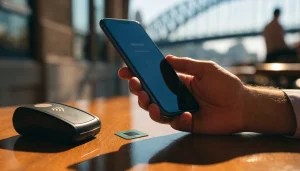
A payment-method mention does not confirm that a named operator supports MiFinity for casino transactions or a specific account and location.

MiFinity and Australian online pokies can appear together in a search, but that pairing does not establish that a particular casino accepts the payment service. The words describe two separate things: a payment method and a type of online gambling service. A site’s use of one does not, by itself, prove anything about the other.
I have seen payment claims reduced to a logo, a line in a comparison table or a broad label such as “Australian pokies.” Each can leave out the condition that matters: whether the named operator currently supports MiFinity for the relevant account and location. A general description of an online casino is not a cashier confirmation. Nor does a mention of MiFinity elsewhere on a site show that it is available for casino transactions.
“Accepts MiFinity” sounds definitive. In practice, the phrase needs a clear subject and context. It could refer to a service being available in a country, an account being able to hold funds, or an operator listing the method for a particular transaction. Those are not interchangeable claims. Without a named operator and a specific confirmation, the phrase remains too broad to establish acceptance at a casino.
When looking for casinos that accept MiFinity in Australia, it helps to check the available operator details before choosing where to play. These brief verdicts highlight the specific information provided for each option.
WinSpirit Casino
WinSpirit Casino lists a Curaçao eGaming licence, issued to Antillephone N.V. Its minimum deposit is A$30.
DragonSlots Casino
DragonSlots Casino is listed under the Curaçao Gaming Authority, with Jumpman Gaming Ltd as operator.
Vegaz Casino
Vegaz Casino lists a Curaçao OGL licence. Its minimum deposit is EUR 20.
Neospin
Neospin lists a Curaçao Gaming Control Board licence held by Hollycorn N.V.
Uptown Pokies
Uptown Pokies has operated since 2017 and is listed as Curaçao-based. Its minimum deposit is A$20.
7Bit Casino
7Bit Casino is listed as Curaçao-licensed and operated by Dama N.V.
SkyCrown
SkyCrown lists a Tobique Gaming Commission licence. Its stated payout times are around 10–15 minutes for crypto and 1–5 days for fiat; the minimum deposit is A$30.
Kingmaker
Kingmaker lists payout times of around 90 minutes for crypto and 1–5 days for fiat. Its minimum deposit is A$30.
MrPacho
MrPacho lists payout times of 30–120 minutes for crypto and 24–72 hours for fiat. Its minimum deposit is A$30.
GoldenCrown
GoldenCrown lists a Curaçao Gaming Control Board licence held by Hollycorn N.V.
The distinction matters especially where a search is framed around Australian pokies. The word “Australian” may describe the intended audience, the currency, the location of a page or simply the way a site presents itself. It does not establish that the operator is Australian, that the service is lawful for local customers, or that MiFinity appears in its cashier. Labels compress details. They do not settle them.
The same caution applies to phrases such as “best” or “new.” Those words can suggest a reviewed selection, but they do not supply evidence of payment support. A newly published page may repeat an old claim; a ranking may be built around general casino features rather than a verified MiFinity option. The wording can sound specific while the underlying assertion remains untested.
From the operational side, payment information has to connect to the actual transaction environment. A payment brand may be mentioned in editorial copy without appearing in the cashier. A payment option may be shown in a general list but not offered to every account. The wording alone cannot tell which situation applies. That is why a broad claim about Australian online casinos should not be treated as confirmation for every operator described that way.
There is also a legal distinction behind the language. Under the Interactive Gambling Act 2001, operators may not provide real-money online casino games to people physically located in Australia. That includes online casino-style services such as pokies. The law concerns the operator’s provision of the service; it does not turn a payment method into evidence that a service is permitted. Australian consumer law does not protect people using offshore casinos.
This is not a claim that a payment search establishes player liability. The legal position described here is about the prohibition on operators providing these services to people in Australia. The Australian Communications and Media Authority is responsible for enforcing the Act. Payment availability and legal status remain separate questions.
I used to treat a payment icon as a useful shortcut when reviewing a site. It was not. The icon could be out of date, apply to another service or say nothing about the account in question. A well-written page can still blur the line between a method being known in the market and a specific casino accepting it. Those are different levels of proof.
For the same reason, “MiFinity mobile casino” is not a distinct technical category. A phone-accessible site may have a mobile layout or app, but that tells nothing about whether MiFinity is supported. Likewise, a page describing Australian pokies does not become a verified payment listing merely because it places MiFinity nearby. Proximity is not confirmation.
A careful reading keeps the claim narrow: identify the operator, identify the payment method, and establish that the operator itself offers that method in the relevant setting. If any part is missing, the wording may describe a search topic, a general market association or an editorial label—not a confirmed option.
That difference is easy to overlook because the phrase is compact. The underlying claim is not.
A deposit claim has to identify both the payment method and the operator it applies to. “Electronic payments accepted” is not the same as “MiFinity deposits accepted”. A broad label may cover cards, bank-linked services or other wallets while leaving MiFinity unsupported. The wording can sound comprehensive without answering the practical question.
From the operator side, a cashier is not a generic catalogue of every payment service mentioned on a website. It is the point where an account’s available transaction options are presented, and those options can depend on the operator’s arrangements and the account’s circumstances. A description elsewhere on a site may be general, out of date or about a different service. The payment name matters.
That distinction also applies to claims about a “MiFinity casino deposit”. The phrase describes an intended route, not proof that a particular operator offers it. Nor does a page saying that a casino accepts digital wallets establish that MiFinity is among them. Similar categories are not interchangeable. A wallet’s features, its acceptance by a business and the availability of a particular transaction are separate matters.
A sound deposit claim should be tied to the named operator’s own current cashier information or written payment terms. The operator’s materials need to identify MiFinity expressly, rather than relying on a broad reference to wallets or online payments. If those materials do not name the service, the claim has not established that the method can be used for a deposit. It is a small wording distinction with a large practical effect.
There is also a difference between a payment method being listed and a deposit being available to a particular account. The cashier may present options according to account settings, location or other operator conditions. A general statement about a site therefore cannot safely be stretched into a universal promise. The relevant question is not whether MiFinity exists as a payment service, but whether the specific operator makes it available for the deposit in question.
Searches for a small fixed deposit amount raise a second issue. A figure in a headline does not establish that the operator accepts that amount through MiFinity. It may refer to another payment option, a promotional description or a condition that has changed. Deposit thresholds are operator-specific, and the method-specific terms need to support the amount as well as the payment route. Without both pieces, the headline joins separate claims that may not belong together.
This is why “best” or “top” labels can be unhelpful when the underlying method claim is unclear. A polished comparison can make a payment option look settled, even where the operator’s own details do not say that MiFinity is accepted. The presentation is not the evidence. The named method and the named site must match.
When reviewing deposit information, the useful details are concrete: whether MiFinity is explicitly listed, whether the listing applies to deposits, whether the terms name any conditions, and whether the cashier reflects the same information. If the wording only mentions payments in general, it does not answer those points. If the cashier and the descriptive text differ, the discrepancy should not be resolved by assuming the broader claim is correct.
The same care applies to instructions. Steps for paying by card or another wallet cannot be repurposed as MiFinity instructions. A card process may involve selecting the card option, entering card details and an amount in AUD, then submitting the payment. That describes a card transaction only. It says nothing about MiFinity’s availability, interface or requirements. Similar-looking checkout language does not make payment routes equivalent.
Nor should a successful deposit through one method be treated as evidence that another is supported. Payment acceptance is configured method by method. Even when two services appear beside each other in a cashier, each has its own availability and terms. The practical record is the explicit method label and the transaction conditions attached to it—not a neighbouring icon, a general wallet category or an account of someone else’s payment.
A deposit claim is therefore narrow by design. It should say which operator, which method and which transaction the statement covers. Broader wording may be easier to publish, but it leaves the important part unresolved. Specific wording does not guarantee that a payment will be accepted; it makes clear what is actually being claimed.
That distinction matters particularly in Australia, where a payment option does not make an online casino service lawful or provide consumer-law protection for someone using an offshore casino. Payment availability and legal status are separate questions. Neither a cashier listing nor a successful transaction changes that separation.
In practice, the most dependable reading is the least dramatic one: a method is supported for deposits only when the relevant operator identifies that method for that purpose, and the applicable terms agree. Everything else is inference. From inside the business, inference is where payment disputes begin.
“Best” is a ranking word, but it does not establish what a casino supports. A page may describe an operator as a leading MiFinity casino, yet that label alone does not show that MiFinity is available to Australian customers or that the payment method works for the transaction being discussed. I would not rank or name an operator on that basis.
A useful comparison needs a specific, checkable claim: the named casino accepts MiFinity, and the claim applies to Australian accounts. Without both parts, a list of the best MiFinity casino sites would turn a broad label into an apparent endorsement. That is a poor basis for comparison.
The wording matters. “Accepts MiFinity” can sound like a settled property of a site, while payment support may depend on the account, location, and transaction. A site-wide label leaves those details unstated. The distinction is practical: a brand name in a heading is not the same thing as confirmation that a particular cashier offers MiFinity to a particular customer.
A meaningful ranking would explain the basis for calling each operator a MiFinity casino. It would distinguish a direct statement of payment support from a general list of payment methods, and it would make clear whether the claim concerns Australian customers. It would also avoid treating an old or undated description as proof of present availability.
These are not minor editorial details. A comparison gives each entry the appearance of having passed the same test. If one operator is included because a page mentions MiFinity, another because a cashier once displayed it, and a third because it accepts some other e-wallet, the ranking combines unlike claims. The order then implies a level of evidence the entries do not share.
I have seen how easily a neat label can outlast the detail behind it. “Top choice” is tidy copy; the operational question is whether the stated method is actually available for the relevant account and transaction. Labels travel further than their qualifications. That is the part worth slowing down for.
I cannot name a casino as a confirmed MiFinity option for Australians or compare operators on that claim. That is not a hidden ranking with the names removed. It means there is no sound basis here for presenting any site as the best MiFinity casino in Australia.
The same applies to a “best casino sites that accept MiFinity deposits” list. A deposit-specific heading still needs an operator-specific confirmation; it does not become reliable just because the claim is narrower. Nor does repeating the claim across several pages make it stronger. Repetition can create familiarity, not verification.
This also limits what a site comparison can honestly say about a MiFinity casino website. A polished cashier, a broad payment-method page, or a general reputation does not establish MiFinity acceptance. If the comparison cannot connect the payment claim to the operator and Australian access, ranking sites would overstate what is known.
I would keep the label out of an operator verdict unless the underlying support is clear. No shortlist. No winner.
A headline can compress several assumptions into a few words. “Best MiFinity casino” may be read as a claim that the operator accepts MiFinity, that this applies in Australia, and that the site has been compared with alternatives. Those are separate propositions, not one.
The restraint is simple: a casino should not be called a MiFinity site merely because the phrase appears beside its name. Until support is confirmed for the relevant market and transaction, the fair comparison is no comparison at all. That avoids turning a suggestive label into a payment recommendation.
“Instant withdrawal” sounds like a single, measurable event. In practice, the phrase can blur separate stages: a casino recording a withdrawal request, reviewing it, releasing a payment, and the funds becoming available in the receiving account. A fast first step does not establish that the full transfer is instant.
That distinction matters for MiFinity. An instant MiFinity withdrawal cannot be treated as an established service feature. There is no reliable timeframe to attach to a claim that a casino pays out instantly through this method. The word “instant” is not a processing standard by itself; it needs to be tied to a defined stage and a stated condition.
I have seen payment wording do a lot of work with very little detail. A page may describe withdrawals as instant while leaving unclear whether it means the request is submitted immediately, approved quickly, or received as cleared funds. Those are not interchangeable outcomes. The label is easy to publish. The conditions behind it are what matter.
A claim about another payment route does not settle the question for MiFinity. Nor does the speed of a deposit establish how a withdrawal behaves. Deposits and payouts are different transactions, and the timing of one cannot be carried over to the other without specific support. A general promise about fast payments is no substitute for a method-specific withdrawal term.
For a casino withdrawal, the important wording is usually found in the payment terms or cashier information: whether the named method is available for payouts, what review or account checks may apply, and how the operator describes the processing stage. If those details do not identify MiFinity and a clear timeframe, the “instant” description remains unproven as a MiFinity payout claim. No clock. No guarantee.
The same applies to phrases such as “instant MiFinity casino withdrawal” or “fast MiFinity pokies payout.” They may describe what someone hopes to find, but they do not establish how a particular operator handles a payment. Adding “real money” or “new” to the wording does not make the timing more precise. A newer site is not, by that fact alone, a faster one.
A useful reading separates the promise from the transaction. Does “instant” refer to the casino’s internal handling, or to money arriving in the MiFinity account? Does the statement name MiFinity, or does it refer broadly to withdrawals? Does it describe a fixed commitment, or merely use an attention-grabbing adjective? Without answers, the claim cannot support a dependable expectation.
There is also a practical difference between a withdrawal being initiated and funds being available to use. A status change on an account may indicate that a request has moved forward, but it does not necessarily tell a customer when the receiving service will show the money. Treating those milestones as one event can make a headline appear more definite than the transaction actually is.
In my experience, “instant” is best read as a claim requiring precise terms, not as a payout promise that explains itself. For MiFinity, no dependable instant-withdrawal timeframe can be stated. That is the limit of what the wording can establish; it should not be stretched into a prediction about when funds will arrive.
A casino’s willingness to process a payment does not establish that its service is lawful in Australia. Payment acceptance is a commercial setting; the legal question is whether the operator may provide the gambling service to people located in the country. Those are separate checks, and treating one as proof of the other obscures the main issue.
The Interactive Gambling Act 2001 prohibits operators from providing real-money online casino services to people in Australia. The prohibition covers casino-style services such as poker, table games and pokies. It applies to the operator’s conduct, including where the operator is based offshore. A foreign location or a payment option that works from Australia does not change that position.
The Australian Communications and Media Authority, or ACMA, enforces the Act. Its role matters because offshore services are not simply outside the reach of Australian rules by virtue of being hosted elsewhere. The regulatory approach includes action against prohibited services and efforts to restrict access. Availability on a website, or a successful transaction, should not be read as official approval.
The law’s treatment of operators is not the same as its treatment of players. The Act does not expressly make an individual’s use of an offshore casino a criminal offence. That distinction is important, but it is not an endorsement or a guarantee that every consequence disappears. It means the statutory prohibition is directed at the provision of the service, rather than creating an explicit player offence for using an offshore site.
There is also a practical consumer-protection gap. Australian consumer law does not protect players using offshore casinos. If a dispute arises over an account, payment, withdrawal, or the operator’s handling of a complaint, the protections and routes available for a domestic consumer transaction may not apply. A site’s terms can describe its own process, but those terms do not turn the operator into a locally regulated casino or provide Australian consumer-law protection.
Legal Risk
Under the Interactive Gambling Act 2001, operators are prohibited from providing real-money online casino services to people in Australia, and users of offshore casinos are not protected by Australian consumer law.
That is why a search for casinos that accept MiFinity in Australia cannot be answered safely by looking only at a cashier’s payment menu. A displayed method may describe what the operator says it can process; it says nothing by itself about whether the underlying service may lawfully be offered to Australian residents. The same distinction applies to any wallet, card, or bank-linked option.
In industry terms, payment acceptance is often presented as a convenience feature. Legally, it is not a licence. Offshore casino services remain within the scope of Australia’s prohibition on operators providing real-money online casino games to people in the country, while ACMA is the regulator charged with enforcement. And players using offshore casinos do not receive Australian consumer-law protection.
Different questions. Different risks.
A payment method and a game catalogue answer different questions. MiFinity, where an operator supports it, is a way to move funds through the cashier. It does not determine which games an operator makes available, how those games are supplied, or whether an account is eligible to use them. Treating “MiFinity games” as a distinct category confuses the payment rail with the content.
I have seen this distinction blurred in casino copy. A page may place a payment logo beside a catalogue description, making the two look like one product. Operationally, they are separate settings: payment support is configured through the cashier and its payment providers; game access depends on the operator’s content arrangements and account rules. One does not establish the other.
That matters when interpreting phrases such as “games using MiFinity” or “MiFinity casino payment options.” They can sound as if the wallet unlocks particular titles. It does not follow. Even a confirmed payment option would say nothing, by itself, about the catalogue. Likewise, a list of games would not establish that MiFinity can be used to fund an account. Separate claims need separate evidence.
There is no MiFinity-linked catalogue that can responsibly be described as a set of titles. Naming games, or implying that certain games are available because MiFinity appears somewhere on a site, would turn association into a claim. The careful reading is narrower: payment acceptance concerns the cashier; content availability is a separate operator decision. Neither should be inferred from the other.
There is also a more basic Australian context. The Interactive Gambling Act 2001 prohibits operators from providing real-money online casino games to people in Australia. A payment symbol does not change that position or make an offshore service lawful for Australian residents. Australian consumer law does not protect players using offshore casinos. Payment access is not a legal safeguard.
In practice, the wording around a cashier can make a service seem more settled than it is. A method may be mentioned in general information without being usable for every account, while catalogue descriptions may be presented without any connection to a particular payment method. The distinction is not cosmetic: it changes what a statement actually supports.
Keep the claims separate. A game description is not proof of MiFinity support, and a MiFinity reference is not evidence of any game catalogue. Nothing more follows.
Australian payment habits can make a familiar method seem broadly usable. Contactless credit and debit cards are accepted almost everywhere in the country, and mobile wallets such as Google Pay and Apple Pay are similarly widespread. Consumers are also comfortable moving between cards, phone-based payments and services linked to bank accounts, including PayPal.
That describes the wider payment environment, not the rules of a particular online service. I have seen this distinction blurred in payment copy: a method is common in everyday transactions, so the wording quietly encourages the reader to assume it will work in a separate setting. The inference does not hold. Availability in shops, apps or general online checkout does not establish that an Australian casino supports that method.
MiFinity should be assessed on its own terms. It is not interchangeable with a card, a mobile wallet or a bank-linked service simply because all can be used to move money. Each has its own provider arrangements and acceptance decisions. A broad statement about Australian consumers’ comfort with switching between payment types cannot establish that any particular casino accepts MiFinity.
The same caution applies to the phrase “Australian casino with MiFinity”. It sounds like a straightforward category, but the wording alone is not evidence of a working payment option. A claim needs to connect the named method to the specific operator and to the relevant service, rather than borrowing credibility from familiar payment habits. Without that connection, the claim remains unconfirmed.
In my experience, this is where polished descriptions can do more work than they appear to. A paragraph may mention cards, wallets and bank-linked services together, leaving an impression of broad support without stating which methods are actually available. That is not a MiFinity confirmation. Familiarity is not acceptance.
Australian consumers may readily switch among established payment types in daily life. That background helps explain why a new or less familiar option can attract interest, but it says nothing about whether an online casino offers it. General habits stay general. The method-specific claim needs its own evidence.
A withdrawal request is not simply a payment instruction. Before an online casino processes financial transactions, it typically requires the account holder to complete a Know Your Customer assessment. That check concerns who holds the account and whether the account information can be verified. It is a general transaction condition, not a rule specific to MiFinity.
From the cashier side, the distinction matters. A payment method may appear in an account, but that does not establish that a withdrawal is ready to proceed. The account assessment and the payment route are separate questions: one concerns transaction eligibility; the other concerns how a casino handles a particular method. Different checks.
I have seen payment language make this boundary look simpler than it is. “Available” can describe a method shown in the cashier, not a completed identity check or an approved withdrawal. For a casino withdrawal involving MiFinity, the label alone cannot establish that the account has passed verification, that MiFinity is supported for withdrawals, or how long processing would take. Those points need separate confirmation from the operator’s current terms and cashier information.
KYC is not a payment-method feature. It should not be presented as a MiFinity-specific requirement, nor does completing an assessment prove that a particular withdrawal method is accepted. A casino’s own transaction rules determine the route after verification; broad statements about wallets or other services do not settle that question.
There is also a wider consumer risk that payment checks do not resolve: Australian consumer law does not protect players using offshore casinos. A verification process may confirm account details, but it does not make an offshore service lawful in Australia or provide the protections of Australian consumer law. Not the same thing.
The practical reading is narrow: identity assessment can precede financial transactions, while method support and processing remain separate matters. No withdrawal speed follows from the fact that a KYC check is required. Nor does a completed check, by itself, establish that MiFinity can be used to receive funds.
A casino’s payment page is a method-by-method statement, not a general promise that every familiar service will work. A logo for a card, a mobile wallet or a bank-linked service does not establish that MiFinity is accepted. Nor does a broad claim such as “multiple payment options” identify which options are available to a particular account or location.
I have seen payment language treated as interchangeable when it is not. A cashier may display several brands, but the relevant detail is the named method and the action the operator says it supports. Deposit access and withdrawal access can also differ; one should not be inferred from the other. Wording matters. “Available” can describe a method in general, while the cashier’s current options determine whether it can be selected for a transaction.
Australian payment habits add no proof. Contactless cards and mobile wallets are widely used, and consumers are comfortable moving between cards, mobile wallets and bank-linked services such as PayPal. That context explains why a casino might list several familiar choices. It says nothing about MiFinity. A method’s popularity, or its similarity to another wallet, is not evidence of acceptance.
The same distinction applies when a page mentions Amex, Visa, Mastercard, Apple Pay, Google Pay or PayPal. Each name refers to a separate payment route, with its own availability and conditions. Information about one cannot safely be carried across to MiFinity. “Same kind of payment” is not the same as “same cashier option”.
A precise claim should identify MiFinity by name and specify what the operator says it can be used for. The wording should be checked against the live cashier and the applicable payment terms, rather than inferred from a generic list or an old description. Even then, acceptance is a payment detail, not a guarantee that a transaction will proceed: account status, issuer decisions and operator rules can matter.
No inference by resemblance.
A bonus described alongside MiFinity is a promotional claim, not proof that using the wallet qualifies an account for an offer. The wording can blur separate conditions: whether a promotion exists, who is eligible, and whether a particular payment method is included. Those points need to be stated explicitly before the claim can be understood. A banner or short headline alone does not settle them.
I have seen promotional language do a lot of work in very little space. “MiFinity bonus” may suggest a special reward tied to the payment method, while the underlying terms may say something narrower—or may not explain the connection at all. The label is not the condition. The terms are.
That distinction matters because a payment method and a promotion answer different questions. The presence of MiFinity in a payment menu would not, by itself, establish a bonus, and a bonus headline would not prove that MiFinity is supported. Neither claim should be inferred from the other.
There is also a legal boundary that promotional wording cannot change. Under Australia’s Interactive Gambling Act 2001, operators cannot provide real-money online casino games to people physically located in Australia. Australian consumer law does not protect players using offshore casinos. A bonus description does not make such a service lawful or provide consumer protection.
So a MiFinity-linked casino promotion should not be treated as an offer merely because the words appear together. Without clear, applicable terms, the supposed connection remains marketing language. No special qualification follows from the label alone.
Jackpot City Casino, Spin Palace, Ruby Fortune, Ignition Casino, Joe Fortune and PlayAmo are listed as supporting American Express deposits for Australian players. Check the casino’s cashier to confirm it is currently available for your account.
Look for American Express by name in the casino’s current cashier or written payment terms. A general mention of cards or digital wallets does not confirm Amex acceptance.
Check with American Express or your bank whether they are blocking gambling transactions to that website. The casino may also not support Amex for your account.
American Express gambling transactions are generally free, but a casino may add a 1.5% surcharge, and Amex cards can incur a 3% currency conversion fee. Withdrawal fees may also apply.
Limits are set by each casino and can differ between operators. Check the cashier or payment terms for the deposit and withdrawal limits that apply to your account; Amex limits are usually higher than those for Visa or Mastercard.
Amex deposits typically have no fee, but a casino may charge a 1.5% surcharge, and currency conversion can cost 3%. Check the casino’s payment terms for charges that apply to your transaction.
Some casinos do not allow withdrawals to Amex, and casino withdrawals generally require a previous Amex deposit. Where available, withdrawals can take up to five days to clear and may incur a fee.