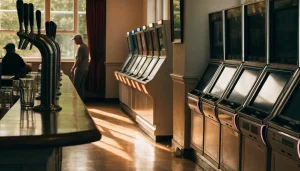
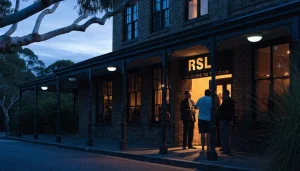
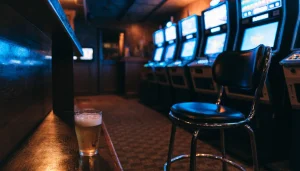
Venue listings can go stale, and an open venue does not necessarily mean its gaming area is operating.
Opening status is a moving detail, not a permanent feature of a venue listing. A page can show a trading schedule while a particular session is affected by a temporary change, and a search result can remain visible after its information has become stale. I treat “open” as a claim about a specific place at a specific time, not as a conclusion that follows from a venue name appearing online.
For a Canberra venue, the dependable check is the venue’s own current notice or a direct confirmation from its staff. General directory entries can help identify what to check, but they are not the same as confirmation that the doors are open or that pokies are operating. If a listing gives a schedule without saying when it was last checked, it should be treated as background information rather than a live status report.
There is a practical distinction between a venue being open and its gaming machines being available. A venue may have different areas, services or operating arrangements; an open dining or bar area does not, by itself, establish that the gaming area is operating. Nor does a past visit establish today’s position. The useful confirmation is specific: whether the venue is open at the time in question and whether its pokies are operating.
When checking, the wording matters. “Open” may refer to the building, while “pokies operating” concerns the machines. A notice can answer one and leave the other unclear. If the distinction matters, it is worth asking both rather than relying on a broad label. That is not a technicality. It is how a venue’s operating information is kept separate from assumptions made by a visitor.
I learned to be cautious with schedules presented as fixed facts. In venue operations, published hours are a reference point; the current state is what staff can confirm. An old listing is not proof of a present opening, and a search result’s position or wording does not make it authoritative. Check the date of any official notice, then confirm directly if the timing is important. No inference from a listing.
There is also a venue-level responsibility that applies while machines are operating. A report by regionriverina.com.au says that, from 1 July, venues with more than 20 gaming machines must have a dedicated responsible gambling officer (RGO) on duty during machine operations. That links the requirement to the period when the machines are running, rather than merely to the venue’s general trading hours. The officer’s presence is part of the operating framework; it is not a signal that a venue is open at a particular moment.
The same report describes a required gambling incident register. It is intended to record relevant occurrences, including behaviour suggesting a patron may be at risk of, or affected by, gambling harm. That is an operational record, not a public opening-status notice. It does not tell a visitor whether a venue is trading, and a venue’s opening schedule does not tell a visitor how a particular incident will be handled. Different questions, different checks.
For someone trying to establish whether a Canberra venue is open now, the sensible sequence is straightforward: check the venue’s own latest information, look for a notice dated recently, and contact the venue when the answer needs to be certain. If the question concerns pokies rather than the venue generally, make that explicit. A general opening label can leave the key point unanswered.
The same discipline applies to early or late visits. A schedule shown on a third-party page may not have been updated alongside a venue’s own arrangements. Treat a listed time as a lead to verify, not a promise. I would not turn a past schedule into a claim about the present. Confirm the current position first.
Choosing online pokies for Canberra means weighing the details available for each option before deciding what suits you. This list gives a concise reference point for the operators featured for 2026.
WinSpirit Casino
WinSpirit Casino lists a Curacao eGaming licence issued through Antillephone N.V. Its stated minimum deposit is A$30.
DragonSlots Casino
DragonSlots Casino lists a Curacao Gaming Authority licence and identifies Jumpman Gaming Ltd as the operator.
Vegaz Casino
Vegaz Casino lists a Curacao OGL licence. Its stated minimum deposit is EUR 20.
Neospin
Neospin lists a Curacao Gaming Control Board OGL licence, held by Hollycorn N.V.
Uptown Pokies
Uptown Pokies has been operating since 2017 and lists a Curacao licence. Its stated minimum deposit is A$20.
7Bit Casino
7Bit Casino is operated by Dama N.V. and lists Curacao as its licensing jurisdiction.
SkyCrown
SkyCrown lists a Tobique Gaming Commission licence. Its stated minimum deposit is A$30, with crypto payouts taking about 10–15 minutes and fiat payouts 1–5 days.
Kingmaker
Kingmaker lists a minimum deposit of A$30. Its stated payout times are about 90 minutes for crypto and 1–5 days for fiat.
MrPacho
MrPacho lists a minimum deposit of A$30. Its stated payout times are 30–120 minutes for crypto and 24–72 hours for fiat.
GoldenCrown
GoldenCrown lists a Curacao Gaming Control Board OGL licence, held by Hollycorn N.V.
“Best-paying” sounds like a ranking with a clear winner. In practice, a return figure is not a forecast of what an individual player will collect, and it does not establish that one pokie will produce a better session than another. I have seen the distinction blur in promotional language: a percentage can look like a promise when it is really a setting attached to the game’s theoretical return.
RTP means return to player. It is a calculated measure of the proportion of stakes a game is designed to return over a very large number of plays. That long-run framing matters. A figure does not say what will happen in a short session, on a particular spin, or to a particular person. It is not a personal payout rate, a minimum return, or a timetable for winnings.
There is another complication. A specialist review reports that some game providers give casinos a choice of RTP settings for the same pokie. If a casino selects one setting and another venue selects a different one, the title alone does not establish that both versions have the same stated return. A game’s name may be identical while its configured RTP differs. That makes a comparison based only on a familiar title incomplete.
Return to player. A calculated measure of the proportion of stakes a game is designed to return over a very large number of plays.
This is why a claim about the “best pokies” in Canberra needs more than a list of popular-sounding games or a headline percentage. The relevant question is whether the return figure is clearly tied to the specific version being discussed. Without that connection, a number may describe a different configuration, or simply be repeated without enough context to compare like with like. A confident label is not evidence.
Even when the setting is known, RTP cannot predict the next result. Each spin is produced separately by a Random Number Generator, so its outcome is not determined by the previous spin. A losing run does not make a win “due”; a win does not make another win more likely. The machine does not keep a personal account of past results and then adjust the next one to even things out.
That independence is easy to lose sight of when outcomes arrive in a sequence. People naturally look for patterns: a feature has not appeared for a while, a machine has paid recently, or a run of small returns seems to be building toward something. Those impressions can feel persuasive at the cabinet, but they do not change how the next random outcome is generated. A streak is a description of what has happened, not a signal about what must happen next.
For someone comparing Canberra pokies, “best paying” therefore has a limited meaning. It can refer to a published theoretical return, provided the figure is accurate and applies to the exact configuration. It cannot sensibly mean that the game is likely to deliver the largest personal win, that a particular venue’s machine is about to pay, or that a session will return a stated share of its cost. Those are different claims, and the return figure does not prove them.
I would also separate a game’s return from entertainment preference. Themes, features and pace may make one pokie more appealing to a person than another, but those qualities do not establish a higher return. Nor does a familiar title guarantee that every installed version uses the same setting. The advertising word “best” often folds all of these ideas together; the underlying evidence may support only a narrower comparison.
The practical reading is restrained: treat RTP as information about a game’s configured long-run design, not as a guide to an individual outcome. Check that any cited return is attached to the version in question, and do not infer a winning pattern from recent spins. There is no reliable shortcut from a headline percentage to a personal result.
The legal distinction is between the person playing and the company providing the service. Under the Interactive Gambling Act 2001, an operator cannot legally offer real-money online pokies to people in Australia without a domestic licence. No Australian online casino licences have been issued, so there is no locally licensed online casino for real-money play.
That distinction can be easy to miss when a website describes itself as “available to Australians”. In practice, that wording describes the operator’s willingness to accept a customer, not permission under Australian law. The law is aimed at the provider. Its restrictions do not turn an offshore site into an Australian-licensed service simply because it accepts Australian registrations or displays prices in Australian dollars.
I have seen the difference between a polished site and a dependable service get blurred in the language around online play. “Best paying” and “no deposit” are promotional terms, not evidence of a local licence or a route to legal protection. A bonus offer does not change the operator’s legal status. Nor does a site’s claim that it serves Canberra or elsewhere in Australia.
There is also a practical risk beyond the legal status. If an offshore casino refuses to pay winnings, an Australian player has no legal recourse in Australia against that casino. This is not a small detail buried in the terms. It changes what can happen when there is a dispute: the familiar local protections and remedies cannot be assumed to apply. A brand’s customer-service desk, an attractive offer, or a statement about international regulation does not create Australian recourse.
The Australian Communications and Media Authority (ACMA) enforces the Interactive Gambling Act 2001. It blocks access to illegal offshore gambling sites, and internet service providers must comply with ACMA’s blocklist. A site that is inaccessible, or that changes its web address, is not thereby made lawful. Nor should a search result or an advertisement be treated as approval by an Australian regulator.
BetStop needs a separate caution. It is an Australian self-exclusion service, but its restrictions apply to Australian-licensed operators; they do not bind offshore sites. Because no Australian online casino licences have been issued, BetStop should not be relied on to prevent access to offshore casino services. That limit matters for anyone using exclusion as a safeguard. An exclusion tool is only effective within the operators and services it covers.
This is why a search for online pokies around Canberra can produce a misleading impression of choice. A page can target local place names, offer real-money play, and still have no Australian casino licence. The location language is marketing, not proof of lawful local operation. I would treat claims about local availability and claims about legal status as two different questions. One does not answer the other.
Legal Risk
Offshore casinos operating without an Australian licence provide no legal recourse in Australia if they refuse to pay winnings.
For anyone affected by gambling harm, the absence of an offshore safeguard is especially important. Deposit limits, loss limits, session time limits and self-exclusion are responsible-gambling tools, but their presence on a site does not establish that it is licensed in Australia or that an Australian regulator can enforce its promises. The legal position remains the same regardless of whether an offer is described as a free bonus, a high-limit game or a way to play for real money.
The short version is not that a foreign website becomes safe because it accepts Australian customers. It is that the Australian framework does not provide a licensed online casino, ACMA blocks illegal offshore gambling sites, and a player facing non-payment by an offshore casino has no Australian legal recourse. The operator’s claims are not a substitute for that protection.
No local licence. No local recourse.
“Near Canberra Airport” is a location claim, not a venue description. A result can appear in a map or directory because of the words attached to it, not because its address has been checked against the airport or its access route. I would separate those things before treating a listing as a recommendation.
The useful test is whether the venue’s own current information gives a street address and identifies pokies as available there. The address can then be compared with the airport location and the actual route between them. Without those checks, “near” has no stable meaning: it might refer to a short drive, a broad district or simply a result returned for airport-related wording. A label alone settles nothing.
That distinction matters for searches about pokies at Canberra Airport, as well as searches for venues around the airport or in North Canberra. Those phrases can describe different places. A venue in the wider Canberra area is not automatically an airport venue, and a result labelled “Canberra” does not establish that it is close to the terminal. Search wording is not evidence of distance.
I have seen location labels do a lot of work in venue listings. “Conveniently located” sounds precise while leaving the reader to supply the missing measure. On the ground, the practical questions are plainer: what is the address, what is the route, and does the venue itself confirm that pokies are available? A map pin may help answer the first two, but it cannot confirm the last one unless the listing is current and authoritative.
The same discipline applies to requests for pokies near the city centre or “near me” in Canberra. Those are not interchangeable with an airport-area recommendation. A device location, a broad suburb label and a venue’s verified address can point to different things. Nor does a general result for Canberra establish a relevant location in the airport precinct.
I would not name a nearby option or give a distance without a dependable address to measure from and a source confirming the venue’s details. That is not a technicality. It is the difference between describing a location and implying that a particular place has been checked. Search results can change, listings can be incomplete, and a venue name can be confused with a nearby landmark.
For an airport-area decision, the standard should therefore be concrete: a current venue address, a clear indication that pokies are offered there, and a route that supports the claimed proximity. If any part is unclear, the airport connection should remain unclaimed. A broad Canberra result is not enough. No implied recommendation.
A venue’s name or reputation does not tell much about how support is organised on the floor. I have seen the operational distinction: a policy on paper is not the same as having a person responsible for responding when a patron appears distressed or unable to stop. That is why the responsible gambling officer requirement matters more than promotional language about a venue being “welcoming” or “well managed”.
A report by regionriverina.com.au describes a requirement taking effect from 1 July: venues operating more than twenty gaming machines must have a dedicated responsible gambling officer on duty while those machines are running. The threshold matters. The requirement is tied to the number of machines and their operation, not simply to whether a venue calls itself a club, hotel or casino. It is a venue-level duty, rather than a promise that every patron will receive the same intervention.
The officer’s role is practical. On-site oversight gives staff a defined point of responsibility when gambling-related concerns arise. It also makes the venue’s arrangements more accountable than relying on a general statement that help is available. The presence of an officer should not be read as proof that a particular venue has met every requirement, nor as a measure of how many machines it operates. Those details need to be established separately.
The same report describes a one-month grace period for venues to make the required changes, including removing signage and putting responsible gambling officers in place. A transition period is not the same as a permanent exemption: it allows time for implementation, but does not alter the underlying duty once the period has passed. In operational terms, staffing and signage are separate tasks. One requires arranging coverage while machines are operating; the other requires checking what patrons can see around the venue.
I would not rank Canberra venues on the strength of a name, a machine count, or a general claim about service. A “best” label says little about on-site oversight unless the relevant arrangements can be confirmed. Nor does the officer rule establish which venues meet its threshold. It sets a responsibility for qualifying venues; it does not function as a directory.
For anyone comparing venues, the useful distinction is between a stated policy and a verifiable arrangement: whether the venue has a responsible gambling officer on duty when required, and whether its signage has been brought into line with the rules. Those are operational questions, not gaming recommendations. Clear responsibility matters. Marketing does not.
A “24-hour” label sounds definite. In practice, it can blur two different things: a venue’s trading hours and the hours when its pokies are available. One does not automatically establish the other.
That distinction matters because opening information can be copied, shortened or left online after arrangements change. A listing may describe a venue generally without saying whether its gaming area operates on the same schedule. A search result can also present an old detail as though it were current. The wording looks precise; the underlying status may not be.
I learned to separate the claim from the evidence. “Open” may refer to a bar, dining room or another part of a venue, rather than the pokies. “All night” may be promotional shorthand, not a statement about continuous machine access. A reliable answer needs to identify what is open and when, not merely repeat a broad label.
That is not proof that every venue closes overnight; it is a reason not to turn an unsubstantiated claim into a recommendation or an assurance of access.
For a time-sensitive visit, the useful check is direct and specific: confirm the venue’s current trading status and ask whether its pokies are operating at the intended time. A general business-hours listing may not answer that second question. If an online listing and a venue’s own current information differ, the discrepancy needs resolving before travel.
“Open now” is also a moment-specific claim. A page that was accurate earlier may no longer reflect the situation, and a venue’s public-facing hours may not describe machine availability. Treating those details as interchangeable is how an apparently simple plan becomes a wasted trip.
The same caution applies to any directory or map entry presenting round-the-clock access as settled fact. Unless the information is current and clearly tied to pokies—not just the premises—the label does not establish when machines can be played.
For anyone comparing hours, the practical standard is modest: a current source, a clear time, and confirmation that it refers to the gaming area. Anything less leaves the central point unresolved. A confident label is not confirmation.
A reference to Crown alongside Canberra does not, by itself, establish that a Crown casino or pokies venue operates in the city. A familiar brand name can appear in a search result, discussion or business listing without confirming that a particular local venue exists. I treat the name and the place as separate claims. Both need checking.
The useful distinction is between a brand mention and an identifiable venue. A venue should have a current, attributable address and information published by the business or another responsible source. If those details cannot be tied to the named operator, the name alone is not enough to plan a visit or describe a place as a Canberra pokies room. That is a verification gap, not proof either way.
The same discipline applies to requests for the best pokies room in Canberra. “Best” needs a stated basis, and a brand association is not evidence of a venue’s machines, facilities or current operation. Without reliable local details, ranking rooms would turn an assumption into a recommendation. I would not do that.
Payout wording needs its own care. A maximum cash payout is not established by a venue name, nor does the word “maximum” explain what a figure would cover. It might refer to a particular machine’s terms, a prize condition or a venue process; those are not interchangeable. No payout amount should be inferred from a Crown–Canberra association. Any claimed figure would need to be matched to the exact machine or applicable written terms and confirmed as current.
Attention: A familiar brand name in a search result does not confirm that a physical venue exists or operates in Canberra.
That is the practical test: match the name to a specific place, then match any claim about its pokies to information that clearly applies there. If either link is missing, the result should remain unconfirmed. Search snippets and repeated mentions can make a claim look settled when they merely repeat the same label. Familiarity is not verification.
I would also keep a venue claim distinct from an online result using the same name. Similar wording does not establish a physical Canberra location, and a page carrying a brand name does not establish what services are available locally. The name needs context: who operates the venue, where it is, and whether the information relates to that venue rather than a different business.
Until those details line up, the responsible description is simple: a Crown casino or pokies venue in Canberra has not been established. No invented address, room ranking or cash-payout figure can fill that gap. A name is only a starting point.
A search for pokies at Canberra clubs can sound more specific than it is. “CBD” describes an area, while “club” may refer to different kinds of venues. Neither term identifies a particular premises, confirms that it has pokies, or establishes where it is. I would not turn those words into a venue recommendation.
That distinction matters when checking a claim about the city centre. A club name in a directory, an old listing or a social post may point to a real organisation without confirming its current gaming facilities. Machine counts and floor layouts are another step beyond that. Without reliable, current details for a specific venue, naming one or describing what it offers would be guesswork.
The airport area is a separate location question; it does not verify anything about central Canberra. Nor does a general mention of clubs establish that a particular CBD club operates pokies. No shortcut. The useful unit of checking is the exact venue, not the broad label attached to it.
“Best” is also a ranking claim, not a location detail. A CBD club cannot be called the best option on the basis of an area name alone. A meaningful comparison would need confirmed venue information and a clear basis for judging it. Without those, a list would create an impression of certainty it had not earned.
Self-exclusion is one of the recognised responsible-gambling tools, alongside deposit, loss and session-time limits. But the existence of that tool in general does not confirm how a particular club handles exclusion, what premises it covers, or how a request is made. Those details need to be checked with the relevant venue or responsible-gambling service before relying on them. A search result or a club label is not proof of coverage.
From the venue side, the distinction is practical: a broad area can help narrow a search, but it cannot substitute for current confirmation of the premises and its services. I have seen how quickly a confident listing can outlast the details it was meant to describe. Names travel further than facts.
Parkes is a place name, not evidence of a particular pokies venue. The distinction matters: a suburb or district can appear in a location description without confirming that a club, hotel or other premises there operates gaming machines. I would not turn the name alone into a venue recommendation.
A useful venue record needs more than a nearby-sounding label. It should connect a premises to a verifiable address and establish what facilities are actually available there. Without that connection, claims about Parkes pokies, a local club or a “best” option would be guesswork dressed as local knowledge. No list is better than a confident-sounding list built on assumptions.
That is also why broad Canberra references do not settle a Parkes-specific question. A Canberra result might cover a different part of the city, or might use a general location tag. It does not, by itself, establish that a venue is in Parkes. The distinction is small on a map and large in practical terms.
From behind a counter, I learned that a label can do a lot of work in advertising. “Local” may describe a broad catchment, not the immediate area; “best” may be a sales word, not a checked comparison. Neither tells us where a machine is. Plainly put.
The responsible way to read Parkes-related claims is to separate location from proof. A named venue needs a traceable address, and any statement about pokies should be supported by information tied to that venue rather than inferred from the suburb name. If those links are absent, the detail should not be filled in with a plausible club name, a machine count or a claim about quality.
This leaves a narrow but honest answer: the Parkes wording alone does not establish a specific Canberra venue or pokies location. It cannot support a ranking of the best pokies in the area either. The place name identifies the subject of the question; it does not verify what is on the ground.
“Cashless” can describe several different things: a venue payment arrangement, a card or account used at a machine, or a bank transfer made through a payment service. Those are not interchangeable. The word alone does not identify how a Canberra venue’s pokies accept payment, or whether they accept anything other than cash.
PayID is not a card or a separate gambling wallet. It is an alias layer on Australia’s New Payments Platform (NPP): a transfer can be directed using an email address, mobile number or ABN instead of entering bank account details. The underlying movement is still a bank transfer. That distinction matters because a PayID payment method does not establish that a gambling service is licensed, that a venue has cashless pokies, or that its games disclose their return settings. Payment plumbing is not a quality check.
There is also a practical complication. A specialist review has reported that some Australian banks, including members of the Big Four, sometimes block PayID transfers to gambling merchants they identify. That is a report about bank controls, not a fixed rule that applies to every bank, customer or transaction. A declined transfer should not be read as evidence about the status of a Canberra machine or venue.
The Newcastle wording creates a separate ambiguity. Newcastle and Canberra are different place names; putting them together does not identify one location or establish a connection between venues in the two cities. A comparison would need specific, independently checkable venue information. Without that, the phrase cannot support a meaningful claim about which place has “best” pokies, nor say anything about whether machines are cashless.
Keep the terms separate. PayID names a transfer method. “Cashless pokies” describes a claimed way to fund or use machines. Neither term, by itself, verifies a venue or its arrangements.
You must be 18 or older to gamble online in Australia.
Companies cannot legally offer real-money online pokies to Australians without a domestic licence, and no such licences have been issued. The law targets operators, not players, but Australians who play on offshore sites have no legal recourse in Australia if a casino refuses to pay.
Yes, PayID is treated like any other qualifying deposit method at the recommended sites.