The phrase is informal; venue labels, online domains and promotional wording do not by themselves prove a licence, access or guaranteed benefits.
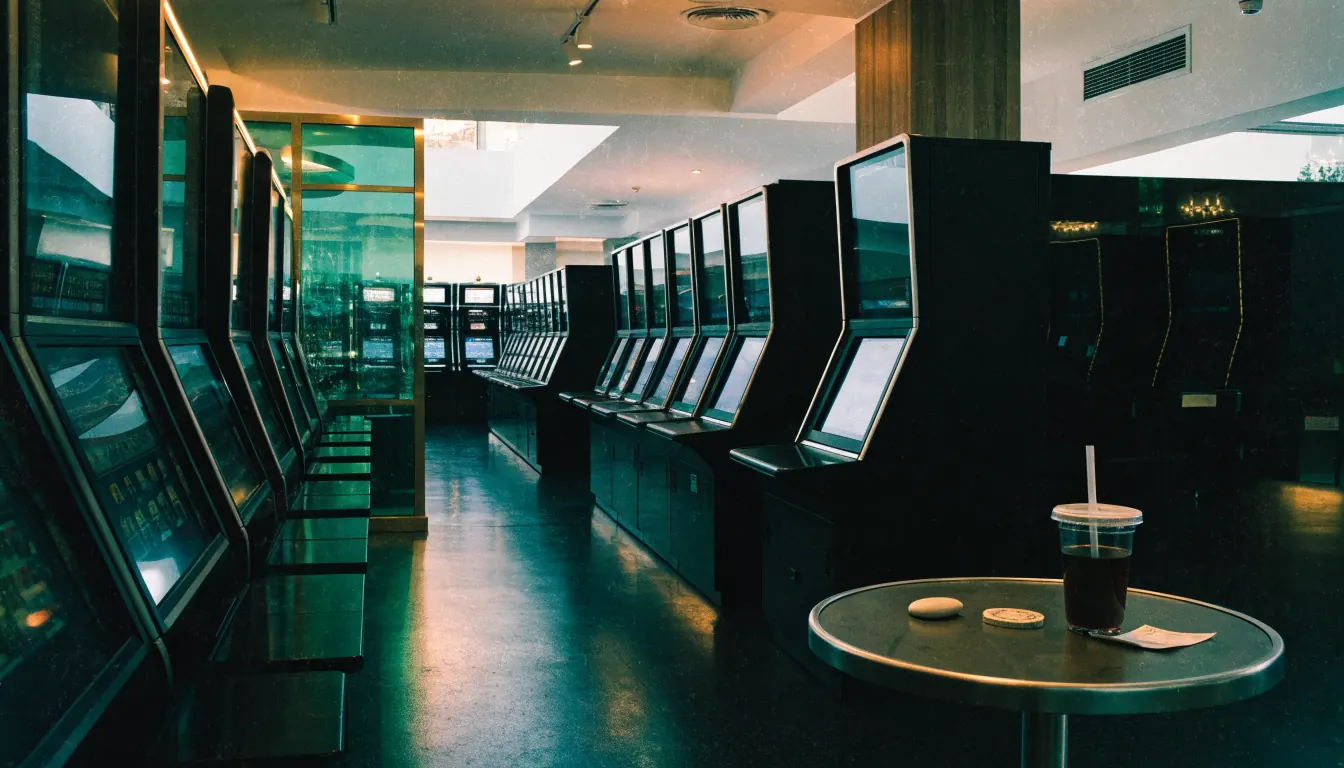
“Pokies parlour” is an informal phrase, not a precise category in Australia’s casino system. It can suggest a place centred on electronic gaming, but it does not by itself identify a licensed casino, describe the scale of a venue or establish what services it provides. In ordinary use, the wording may blur the distinction between a full-scale casino and a smaller gaming venue.
That distinction matters. A casino is a specific kind of venue operating under a licence issued by its state or territory. The phrase “pokie parlour” is looser: it can be used descriptively, casually or in advertising, without carrying the same regulatory meaning. I have found that promotional language often makes a venue sound like a distinct category when the wording alone tells very little. A label is not a licence.
A specialist casino review has counted more than 20 full-scale casinos across Australia’s eight states. That figure should be understood as a count reported by that type of publication, rather than as a permanent official total: venue lists and market descriptions can change. It does, however, convey the scale of the national casino sector. A “parlour” in a name or description should not automatically be read as one of those full-scale casinos.
Choosing a pokies parlour casino in Australia means checking the details that matter to you before deciding where to play. This list offers a concise reference to the available licensing, deposit and payout information for each operator.
WinSpirit Casino
WinSpirit Casino lists a Curaçao eGaming licence, OGL/2024/923/0383, issued through Antillephone N.V. Its minimum deposit is A$30.
DragonSlots Casino
DragonSlots Casino is listed under the Curaçao Gaming Authority, with Jumpman Gaming Ltd as the named operator.
Vegaz Casino
Vegaz Casino lists Curaçao licence OGL/2024/1335/0780. Its minimum deposit is EUR 20.
Neospin
Neospin lists Curaçao Gaming Control Board licence OGL/2023/176/0095, with Hollycorn N.V. named in connection with the licence.
Uptown Pokies
Uptown Pokies is described as operating since 2017 under a Curaçao licence. Its minimum deposit is A$20.
7Bit Casino
7Bit Casino is listed as Curaçao-licensed and operated by Dama N.V.
SkyCrown
SkyCrown lists a Tobique Gaming Commission licence. Its stated payout speed is around 10–15 minutes for crypto and 1–5 days for fiat; the minimum deposit is A$30.
Kingmaker
Kingmaker lists payout speeds of around 90 minutes for crypto and 1–5 days for fiat. Its minimum deposit is A$30.
MrPacho
MrPacho lists payout speeds of 30–120 minutes for crypto and 24–72 hours for fiat. Its minimum deposit is A$30.
GoldenCrown
GoldenCrown lists Curaçao Gaming Control Board licence OGL/2023/176/0095, with Hollycorn N.V. named in connection with the licence.
Operating hours offer another useful point of comparison. All major Australian casinos operate around the clock. That does not mean every part of a property, or every service within it, is necessarily available at every hour; it describes the operating pattern of the major casinos as a whole. Nor does continuous operation turn “parlour” into a formal venue class. The words still need to be understood in context.
The practical difference is one of scale and status, not simply atmosphere. A full-scale casino is a licensed property. A gaming venue may offer gaming as one part of its wider operation, but the casual phrase “pokies parlour” does not establish whether the venue is a casino, what licence applies, or what is available on site. I would not infer those details from a name alone. The wording may be familiar; its meaning is not fixed.
This is also why a “parlour casino” can be an imprecise expression. It combines a colloquial description with a formal-sounding term. That combination can make a place sound like a particular kind of casino even when the phrase itself supplies no proof of classification. In careful writing, the terms should not be treated as interchangeable: “casino” refers to a regulated property, while “parlour” is not, by itself, a reliable statement of regulatory status.
 Pokies in Melbourne: locations, hours and venue checksLearn how to check whether a venue is near an arrival point, what “open now” can tell you, and why map labels…
 Melbourne Casino Guide: Hotels, Dining and Venue DetailsUnderstand how casino hotel offers differ and what to check in room rates, dates and cancellation terms, alongside searches for dining, events…
The same caution applies when the phrase is used for an online product. Words that resemble the name of a physical venue do not make a website a casino in the Australian licensing sense. A physical casino and an online service are different things, governed in different ways. The shared language can muddy that distinction, but it does not erase it. A familiar label is not evidence of a venue or a legal status.
In my experience of how venue descriptions are written, the key is to separate the attractive shorthand from the information it actually provides. “Pokies” signals a style of gaming; “parlour” suggests a place or setting; “casino” may refer to a specific licensed operation. Joined together, they can sound definitive without answering basic questions. The phrase may help describe what someone has in mind, but it cannot do the work of a licence record or a venue description.
So, in Australia, “pokies parlour” is best read as colloquial wording rather than as a formal name for a nationally defined type of casino. The country has a substantial full-scale casino sector, and its major casinos operate 24 hours a day. Those facts provide context, not confirmation that any venue using “parlour” in its description is one of those casinos. Terminology first. Status separately.
A specialist gambling directory gives a snapshot of the geographic spread: it lists gambling in 147 Australian cities and identifies Sydney, New South Wales, as the largest gambling city, with 11 gambling facilities. These are directory counts, not a permanent map. Venue listings can change, and “gambling facilities” should not be read as a count of full-scale casinos alone.
A specialist gambling directory lists gambling in 147 Australian cities, with Sydney identified as the largest, featuring 11 gambling facilities.
That distinction matters when planning a visit. A city may have several kinds of gaming venue, while a casino is a specific property operating under a local state or territory licence. The directory’s figure gives a sense of concentration, but it does not establish that every listed facility has the same entry rules, services or operating arrangements.
The Northern Territory offers a more compact example. The same kind of directory records three casinos across three cities, with Alice Springs listed as the city with the most: one casino. That count is a point-in-time listing, rather than a guarantee that the number will remain unchanged. For a physical address, Lasseters Casino is listed at 93 Barrett Drive, Alice Springs, NT 0870, Australia. An address is useful for identifying the property; it does not by itself describe current access arrangements.
Casino access is not simply a matter of arriving at a building. The nationwide minimum age for casino entry is 18, and valid photo identification is required for entry to all major Australian casinos. In practical terms, the location and the entry check are separate parts of the visit: a venue may be easy to find, but entry still depends on meeting the applicable requirements.
The access context can also differ from one property to another. Australian casinos are licensed by their local state or territory jurisdiction, so the relevant venue’s own information is the place to confirm current arrangements before travelling. A city-level listing cannot settle those details. Nor does a count of facilities tell anything about who may enter a particular property or which areas are accessible.
 Pokies in Canberra: venue checks and legal contextLearn how to verify a Canberra venue’s current status, why an open venue may not have pokies operating, and what the available…
 Best pokies in Brisbane: what can be verifiedLearn how RTP limits short-session predictions, why settings may vary by venue, and what this guide can verify about Brisbane venues, payments…
I have seen location lists treated as if they were door instructions. They are not. They help narrow down where venues are concentrated; they do not replace the property’s entry information. That is especially relevant when a directory groups different forms of gambling under one city total.
For a search about a pokies parlour or casino in Australia, the useful geographic question is therefore narrower than the headline wording: which physical venue is meant, and what are its current entry conditions? Sydney’s directory count indicates a larger cluster of gambling facilities, while the Northern Territory listing shows a small spread across separate cities. Neither figure alone identifies a suitable venue or confirms access on a particular day.
The address in Alice Springs provides one concrete point on the map. Beyond that, a careful location check should distinguish a casino from other listed facilities and treat directory totals as a snapshot. The map helps. The door has its own rules.
A page can load, accept account activity and present itself under a different web address without showing that it has any Australian authority to provide online casino games. I learned to separate the mechanics of access from the legal status of the service. One describes what a website does on a screen; the other depends on the law and the operator’s conduct.
Prohibition
The Interactive Gambling Act 2001 prohibits operators from providing real-money online casino games, such as slots, poker, and table games, to people in Australia.
That distinction matters because the Interactive Gambling Act 2001 prohibits operators from providing real-money online casino games to people in Australia. The restriction covers casino-style services such as slots, poker and table games. A site’s wording, layout or ability to process registrations does not change that position. Nor does a domain that resembles an earlier address establish that the service is permitted.
The federal regulator in this area is the Australian Communications and Media Authority, generally known as ACMA. Its work includes enforcing the Interactive Gambling Act and overseeing compliance with federal interactive gambling rules. ACMA can investigate suspected breaches and take enforcement action when operators provide or advertise prohibited services. That is a different function from issuing a local casino licence: Australian land-based casinos are licensed by their state or territory, while real-money online casino services are prohibited for operators serving people in Australia.
Blocking is one of ACMA’s available tools. The authority can ask Australian internet service providers to restrict access to websites that provide prohibited interactive gambling services or advertise them in Australia. Since enforcement action began in November 2019, ACMA has blocked more than 1,455 websites associated with illegal gambling or affiliate promotion. The figure reflects enforcement activity over time; it does not turn a blocked address into a complete map of every service operating online.
A block can affect whether a particular domain resolves through an Australian provider. An operator may later use another address, and the new address may load. That change is about reachability, not permission. A working link is not regulatory clearance. I have seen those two ideas blurred in promotional language because “available” sounds like “approved” when it is not. They are separate tests.
The same care applies to traffic and accounts. A page that accepts account details or appears to allow play has demonstrated a technical function, not Australian authorisation. The address itself is not a licence document, and an alternate domain does not erase the rules applying to the service behind it. In this market, the decisive question is not whether a site opens but whether the activity it offers is lawful for an operator to provide to people located in Australia.
ACMA’s enforcement record also includes services leaving the Australian market. Reports give different totals for withdrawals since enforcement began in 2017: one figure is more than 210 services, while another is over 190. The underlying point is narrower: enforcement has been followed by illegal services withdrawing from the market, while blocking has been used against websites and related affiliate pages.
For online casino wording, then, “play” and “online” describe the format a site claims to offer; they do not establish its status under Australian law. A domain can change, a page can remain reachable, and account functions can still appear. None of those details overrides the prohibition on providing real-money online casino games to people in Australia. Reachability is not a licence.
“Free spins” and “free chips” sound like precise offers. In practice, those phrases are promotional labels, not a complete description of what is available. The wording alone cannot establish whether a promotion exists, who can access it, what activity it applies to or what conditions attach to it. A headline supplies the hook. The terms would need to supply the mechanics.
Attention Promotional labels like "free spins" or "free chips" do not establish eligibility, conditions, or regulatory status; these details must be verified in the terms.
That distinction matters because the word “free” describes the advertised price, not necessarily the whole arrangement. It does not, by itself, tell anyone whether a player must register, make a deposit, meet an eligibility rule or satisfy another condition. Nor does it explain what happens to any winnings associated with the offer. Those details cannot be inferred from the label.
I have seen how promotional copy is built: the short phrase is made easy to notice, while the operational meaning sits elsewhere. That is not proof of a particular restriction; it is why the headline should not be mistaken for the complete offer. “Free” is a claim about the promotion’s framing. It is not a substitute for its terms.
The same applies to free-play language attached to a pokies parlour. A site displaying an offer, opening successfully or handling account traffic does not thereby demonstrate that it is an Australian-licensed online casino. An alternate web address changes where a page is reached, not what its regulatory status is. The appearance of a promotion cannot settle that question either.
There is a further distinction in Australia: real-money online casino games are prohibited for operators serving people located in the country. Calling spins or chips “free” does not turn an online casino service into a different kind of service. Promotional wording cannot establish that such play is lawful or authorised. Label first, legal character second—never the other way around.
 Best Pokies in Perth: Hours, Venues and RulesLearn why a venue’s listed hours do not confirm its gaming area is operating, and how Perth venue searches differ from online-pokies…
 Pokies in Tasmania: Hours and Verified DetailsLearn why venue opening hours do not confirm gaming-area availability, what venue-level information can establish, and where online pokies meet Australian legal
“Free spins” may imply a limited play feature; “free chips” may suggest a balance or credit. Those impressions are not reliable descriptions of actual terms. Without clear conditions, the phrases leave basic points unresolved: whether the offer is live, what it covers and whether any value can be withdrawn. Supplying an answer from the wording alone would mean inventing details.
That is the small print’s job. A headline is designed to compress. Terms are where an offer’s actual scope is set out, if an offer exists at all. Even then, terms do not prove that a website is authorised to provide online casino play in Australia. These are separate questions: what a promotion says, and whether the underlying service may be provided.
For that reason, free-spin or free-chip language should be read as an unverified promotional claim, not as evidence of a usable benefit. It does not confirm availability, eligibility, conditions or regulatory standing. The word “free” carries very little by itself. The fine print carries more; the legal status carries more still.
A polished review can make a “parlour” sound like a defined venue, a particular service or an established brand. The word alone does not settle which meaning is intended. I have found it useful to separate what a page actually identifies from what its presentation encourages the reader to assume.
Start with the claim itself. Does it name a physical venue, describe an online service, or use “parlour” as promotional language? Those are different propositions. A review that moves between them without saying so may leave a reader with the impression that a real location, an operator or an online offer has been independently established when the text has only repeated a label.
The same discipline applies to evidence. A photograph, a confident tone or several pages using similar wording does not, by itself, confirm a venue’s status or the origin of a service. I look for details that can be checked independently and for a clear distinction between observation and assertion. If a review says that a service has changed its address, that is a claim about a change—not proof that the new address represents a different business, or that the underlying operation has changed.
Domain changes are particularly easy to misread. A specialist market review has reported ACMA website-blocking action involving Fair Go-related alternate domains. Separately, blocking can affect which domain names resolve through Australian internet service providers, while alternate addresses may appear over time. These points help explain why a page or address may be unavailable or may differ from one mentioned elsewhere. They do not establish why a particular address changed, who controls it, or what service is being provided there.
That distinction matters in reviews that present an alternate domain as a fresh launch, a return, or evidence that a service is now operating differently. The address can change; the claim still needs its own support. A new web address is not an independent review, and repetition across pages does not turn an unverified statement into a confirmed one.
I would also treat labels such as “official,” “verified” and “reviewed” as claims requiring context. Who is making the statement? What exactly did they check? Is the wording describing a physical property, a website, or merely the name used in promotional copy? If those points remain blurred, the review has not supplied enough detail to support a firm conclusion.
There is a practical limit here. ACMA’s actions and the effects of blocking provide context for domain changes, but they do not answer every question about a particular page. Nor does a page loading, disappearing or reappearing establish the truth of its own description. A careful account keeps those observations separate rather than using one as a shortcut to the other.
In my experience, that is where the useful review ends: not with a confident verdict built from a name or a changing address, but with a clear account of what can actually be identified. No borrowed certainty.
A sign-up headline compresses several separate claims into a few words: that an account can be opened, that a benefit is attached to registration, and that the benefit can be used under stated conditions. Those claims need to be separated. “No deposit” describes one part of the proposed arrangement; it does not, by itself, establish what is offered, who qualifies, or whether the offer can be used for real-money casino play in Australia.
I have seen how a headline does its work. It gives the impression of a completed deal before the conditions have been read. The wording may sound definite, but the mechanics sit elsewhere: in eligibility rules, account terms, and restrictions on use or withdrawal. Without those details, a sign-up promise is not a usable description of an offer. It is only a label.
A site's ability to load, accept account registrations, or offer sign-up bonuses does not grant it legal authorisation to provide real-money online casino games in Australia under the Interactive Gambling Act 2001.
The same applies to a claim that registration brings a bonus without an initial deposit. The phrase does not establish that a particular operator is making the offer, that it applies to every new account, or that the advertised benefit can be converted into money. Nor does it establish whether registration alone is enough, whether identity checks apply, or what actions are required before any benefit can be accessed. Those are terms, not details that can safely be inferred from the headline.
A deposit-related claim needs the same discipline. “Sign-up bonus” does not tell whether a deposit is required, what kind of deposit qualifies, or whether the offer is tied to a particular payment method. “No deposit” appears to answer one of those questions, but it cannot answer the rest. The words do not reveal an offer’s eligibility rules or how its value may be used. A headline cannot stand in for the conditions that define the arrangement.
There is also a more basic distinction between an online account and a lawful service. A site may load, accept account traffic, or appear under a different web address; none of those things makes it an Australian-licensed online casino. The Interactive Gambling Act 2001 prohibits operators from providing real-money online casino games to people located in Australia. Casino-style online play, including slots, poker and table games, falls within that prohibition. A sign-up promotion cannot change the legal status of the service it is attached to.
That point matters because promotional language can make an account feel like an ordinary retail registration: create a profile, receive a benefit, then decide what to do next. The sequence is familiar, but familiarity is not evidence of authorisation. A working registration page and a bonus banner show what a website is presenting, not that the underlying service is permitted for Australians. A different address does not alter that distinction.
The commercial purpose of a sign-up offer is to bring a new account into a particular relationship with a service. The headline is designed for quick recognition; the conditions define what the business is actually promising. If the conditions cannot be read clearly, the headline leaves essential questions unanswered. That is not a reason to fill the gaps with assumptions. It is a reason to treat the wording as incomplete.
I would not turn a promise of a “no-deposit bonus” into a claim about a specific benefit, nor treat the phrase “sign-up bonus” as proof that an offer exists on usable terms. The exact eligibility, deposit requirement and restrictions must be established by the terms themselves—and, in this market, an offer’s wording does not override the prohibition on operators supplying real-money online casino games to people in Australia.
A bonus headline is not a licence. A registration page is not proof of lawful access. And “no deposit” is not a complete set of conditions.
“Bonus” sounds like something already available. In practice, it is a promotional label: it may describe an offer, but the word by itself does not prove that an offer exists, who can receive it, or what must happen before any benefit can be used.
That distinction matters with claims about a casino bonus. A heading or short description can make the benefit sound settled while leaving the operative details unstated. The actual terms are what define the offer; the label does not fill in those terms. No particular general bonus offer or conditions can be confirmed from the wording alone.
I have seen promotional language do its work before the conditions are read. “Bonus” creates a simple picture of extra value. The rules behind a real promotion may determine eligibility, how the benefit is credited, what restrictions apply and whether it can be withdrawn or used. Without those terms, none of those mechanics should be assumed.
Nor does the word identify the type of promotion. It might be used broadly in advertising, but that does not make it interchangeable with a sign-up offer, a deposit offer or free-play wording. Those are separate claims, each requiring its own clear terms. Treating them as one thing is how a vague headline starts to look like a promise.
The distinction is especially important in Australia, where casino entry has a nationwide minimum age of 18. That entry rule is not evidence that a promotion exists, nor does it establish eligibility for any particular offer. Access and promotional entitlement are different matters.
A credible description needs more than a prominent label. It needs conditions that explain what is offered and how the offer works. If those details are absent, the careful reading is not that the benefit is guaranteed but that the claim remains incomplete. No terms, no settled offer.
That is the practical meaning of “bonus” in a heading: a promotional assertion awaiting its terms, not a benefit secured by the word itself. A strong headline may be easy to remember; it cannot substitute for the rules that govern the offer.
“VIP” sounds like a formal tier of access. In practice, the word on a page or sign does not, by itself, explain who qualifies, what areas are included or whether access is available at all. “Parlour” can add an air of exclusivity without defining a separate legal category. The label is a claim about access, not proof of its terms.
I have seen how these words do their work: they make an arrangement sound established before the practical details are clear. A genuine access description needs to say what the status permits and how it is obtained. Without those particulars, “VIP parlour” remains a description whose meaning cannot be settled from the wording alone. No inference should be made that a particular venue offers such a space.
That is separate from casino licensing. In Australia, each casino is licensed by the state or territory in which it operates. A local licence concerns the property’s regulated operation; it does not, simply by existing, confirm a VIP tier, private room or special admission arrangement. Nor does promotional language create one.
General entry rules still matter. The minimum casino-entry age is 18 nationwide, and major Australian casinos require valid photo identification for entry. Any claimed VIP status sits alongside those basic requirements; it does not establish an exception. Access arrangements can also differ by property, so a label used in one setting cannot safely be carried across the industry as a standard.
All major Australian casinos require valid photo identification for entry, and the nationwide minimum entry age is 18.
The distinction is plain: licensing describes regulatory authority over a property, while “VIP” describes an asserted access benefit. One does not verify the other. Until the actual terms are stated, the phrase offers atmosphere, not a dependable account of admission. A label is not a credential.
“Parlour pokies” suggests a room or venue defined by its machines. In Australian casinos, the relevant national measure is more precise: 3,308 gaming machines are recorded as endorsed on venue licences and installed in casinos. That figure describes the casino machine count across the country, not a single parlour or a particular property.
I have always treated a machine count as an operating detail, not a description of the experience. The number says how many machines fall within that licensed and installed category nationally. It does not tell how they are arranged, what titles are available, or how many sit in any one venue. Those are separate questions, and a national total cannot answer them.
The wording matters. “Pokies” is a familiar Australian term, while “parlour” can imply a distinct, self-contained gaming room. Joined together, the phrase may sound like a specific venue type. The machine count, however, is tied to casinos and their licences; it does not establish that every casino has a separately named parlour or a uniform layout.
That distinction is easy to lose in promotional language. A headline can make a room sound like a defined product, while the underlying count is simply a national regulatory and venue measure. It is a useful point of scale, but not a catalogue or a promise about what a particular casino contains.
The clean reading is modest: casino-installed gaming machines are counted nationally, with 3,308 recorded in that category. The figure supplies context for the scale of machines in casinos. It does not turn “parlour pokies” into an inventory, venue label or description of specific games. No more than that.
A request for a real-money pokies parlour points to an intended activity: staking money on casino-style games online. It does not establish that a site offering that activity is authorised in Australia. Search wording describes what someone hopes to find; it is not evidence of a licence, legal status or local approval.
The distinction matters because the Interactive Gambling Act 2001 prohibits operators from providing real-money online casino games, including slots and table games, to people physically in Australia. Calling a website a “parlour”, presenting it as a casino or using familiar gaming language does not change that position. Nor does a polished sign-up page.
I have seen how easily the presentation can do the work of proof in a customer’s mind. A site may load, invite account activity or appear under a different address, and still none of those details establish that it is an Australian-licensed online casino. Access is a technical fact. Regulatory status is a separate question.
That is the boundary to keep in view when real-money language appears beside an online casino claim. The words can signal the kind of play being promoted, but they cannot turn prohibited online casino services into a locally authorised offer. A label is not a licence.
This is also why a search result should not be read as a regulatory endorsement. Placement, wording and availability on a screen describe how a service is presented or reached; they do not establish that the service may lawfully provide real-money casino games to Australians. The central issue is not whether the phrase sounds like a physical gaming venue, but whether the activity is an online casino service offered to someone in Australia.
Intent is clear. Authorisation is not.