A practical guide to checking venue-specific hours and availability, while distinguishing verified details from claims that the available information cannot support.
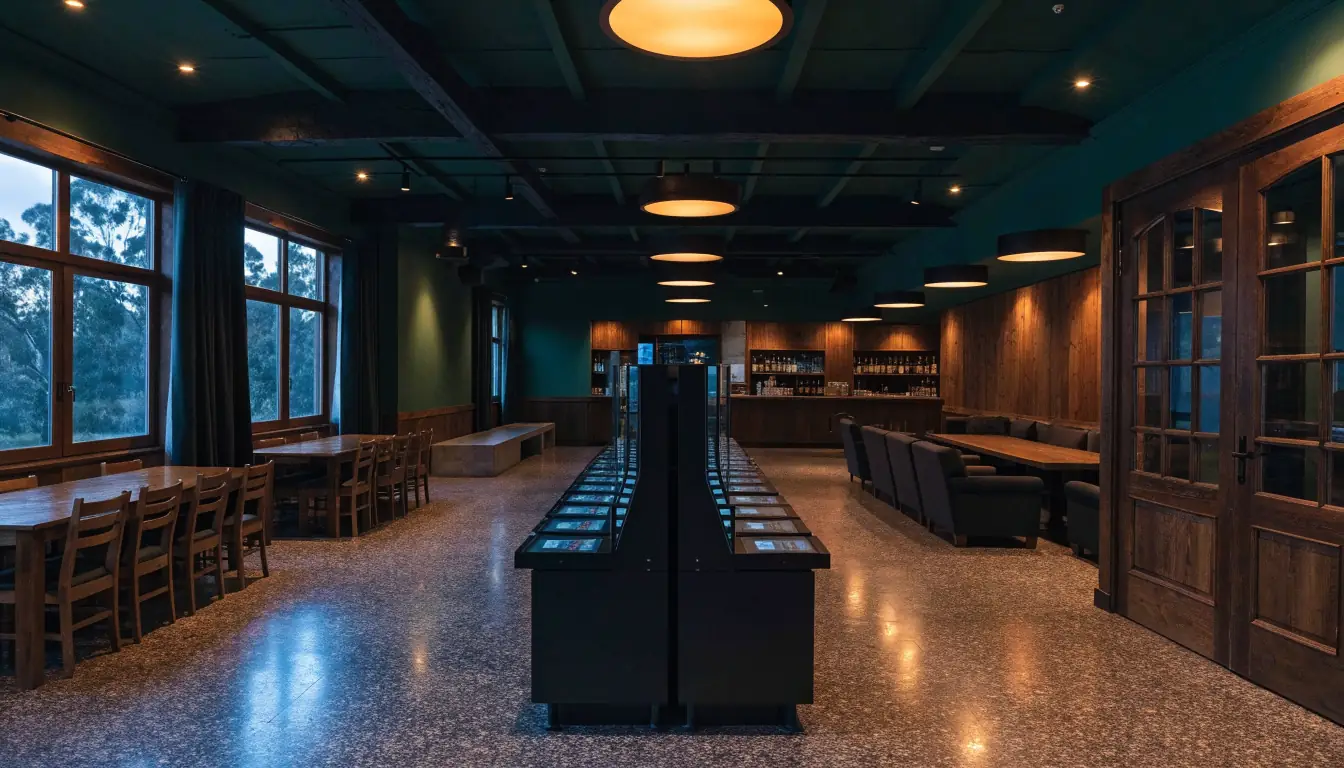
A general indication that pokies are open in Tasmania cannot establish whether a particular venue has machines available at a particular time. The operating status belongs to the venue, not to the state as a whole. An answer that appears current may describe another place, a different service or information that has not kept pace with a change in venue operations.
I learned to separate three things that are often collapsed into one result: whether a venue is open, whether its gaming area is operating, and whether the relevant information is current. A venue’s general opening hours do not, by themselves, confirm that pokies are running throughout that period. Nor does a result describing pokies as available somewhere in Tasmania settle the question for a town, club or hotel elsewhere.
“Open now” is especially fragile. It depends on the time the information was checked and on which venue it refers to. A page with no clear update context may still be useful as a starting point, but it cannot carry the same weight as a current statement from the venue. Business listings can also compress different parts of an operation into one label. That can leave the practical question unanswered: are the pokies operating at this venue at this time?
The sensible check is therefore specific. First identify the exact venue, then look for its own current information about gaming operations. If the published details distinguish general venue hours from gaming hours, that distinction matters. If they do not, a direct confirmation from the venue is clearer than assuming that one schedule covers every part of the premises. A listing that simply says “open” may be describing the restaurant, bar or venue as a whole.
This is also why broad claims about early or late availability should be treated carefully. A phrase such as “open early” can sound like a statewide feature when it may refer only to a single location—or to the venue’s doors rather than its pokies. Likewise, an apparently late closing time does not prove that machines remain available until then. The wording needs to say what is open, where, and when. Without those details, the claim has little practical value.
The same discipline applies to a name attached to a search for Tasmania. A brand or venue name in a phrase does not establish that a corresponding Tasmanian venue exists, that it has pokies, or that it is open. Those are separate points to confirm rather than fill in from a familiar name. Better to leave an unsupported assumption aside. Small distinction, real consequence.
There is a further operating condition for larger venues. A report published by regionriverina.com.au says that, from 1 July, a venue with more than 20 gaming machines is required to have a dedicated responsible gambling officer (RGO) present while those machines are operating. That requirement is tied to machine operation, rather than simply to whether the venue’s doors are open. It is not a substitute for checking hours, and it does not establish that any particular Tasmanian venue meets the threshold.
In practice, the cleanest answer to an opening-hours question is one attached to a named venue and an identifiable current update. Where the venue’s own information is unclear, the uncertainty should remain visible rather than being converted into a confident statewide timetable. A result can point in the right direction; it cannot make one venue’s schedule apply to another.
I would not treat a general “open” label as confirmation of gaming availability. Nor would I infer that machines are operating merely because the rest of a venue is open. The distinction can look fussy on a screen, but it is exactly where stale or broad information becomes misleading.
For a Tasmanian venue, the useful answer is not a blanket claim about when pokies open. It is the current operating information for that specific place, with gaming hours distinguished from general venue hours where possible. Anything less leaves the time-sensitive part unresolved.
Choosing pokies in Tasmania for 2026 means finding an option that fits your preferences and checking the details that matter to you. This guide offers a concise reference to the available operator information.
WinSpirit Casino
WinSpirit Casino lists a Curacao eGaming licence, OGL/2024/923/0383, issued through Antillephone N.V. Its minimum deposit is A$30.
DragonSlots Casino
DragonSlots Casino is licensed by the Curacao Gaming Authority and operated by Jumpman Gaming Ltd.
Vegaz Casino
Vegaz Casino lists a Curacao licence, OGL/2024/1335/0780. Its stated minimum deposit is EUR 20.
Neospin
Neospin lists a Curacao Gaming Control Board licence, OGL/2023/176/0095, held by Hollycorn N.V.
Uptown Pokies
Uptown Pokies is described as operating since 2017 under a Curacao licence. Its minimum deposit is A$20.
7Bit Casino
7Bit Casino is licensed in Curacao and operated by Dama N.V.
SkyCrown
SkyCrown lists a licence from the Tobique Gaming Commission. Its stated payout timing is around 10–15 minutes for crypto and 1–5 days for fiat; the minimum deposit is A$30.
Kingmaker
Kingmaker lists crypto payouts at around 90 minutes and fiat payouts in 1–5 days. Its minimum deposit is A$30.
MrPacho
MrPacho lists crypto payouts at 30–120 minutes and fiat payouts at 24–72 hours. Its minimum deposit is A$30.
GoldenCrown
GoldenCrown lists a Curacao Gaming Control Board licence, OGL/2023/176/0095, held by Hollycorn N.V.
“Best paying” sounds like a ranking, but a return percentage is not a forecast of what a particular person will collect. It describes a game’s configured long-run return under specified conditions. It does not say how a session will unfold, whether a particular spin will win, or how much might be returned over a short run.
I have seen game figures used as though they settle the question of which pokie is better. They do not, on their own. A percentage can be useful only when its meaning and context are clear: which version of the game it describes, where it is configured, and whether the comparison is being made on the same basis. Without that context, a neat figure can create more confidence than it deserves.
There is another complication. A specialist review reports that some providers give casinos a choice of more than one return-to-player setting for the same pokie. If that account applies to a particular game, the title alone would not establish its configured return at every casino. Two venues could offer the same named game with different settings. That is a reported possibility, not a basis for assuming that every provider or venue works this way.
A game's return-to-player percentage is a long-run theoretical measure, not a forecast of individual winnings or a guarantee of a specific outcome.
This matters when comparing claims about Tasmania casino pokies or games described as the best paying in Tasmania. A label attached to a game is not enough to verify its setting at a particular venue. Nor does a figure quoted in a review automatically describe the version available in every location. The detail needs to be tied to the specific game and configuration; otherwise, the comparison is incomplete.
The percentage also describes an aggregate, not a personal outcome. A pokie uses a Random Number Generator to determine each spin, and one result does not cause or predict the next. A run of losses does not make a win “due”; a recent win does not make another one more likely. The mathematics does not keep a score for an individual session and correct it toward a promised return.
That distinction is easy to lose in promotional wording. “High return” can sound like “more likely to win now,” but those are different ideas. A long-run return figure is not a schedule of payouts, a minimum result, or a promise that the amount put in will come back to any one player. Even a game with a higher stated return can produce a losing session. The figure cannot remove that possibility.
I would also separate a game’s theoretical return from the size and frequency of its prizes. A single percentage does not, by itself, explain how outcomes are distributed or what a particular session might look like. Treating it as a complete description turns one technical measure into a broad claim it cannot support. The fine print matters. So does the setting behind the figure.
For anyone assessing a claim, the useful questions are narrow: does the stated return refer to this exact game, is the configuration identified, and is the figure being presented as a theoretical long-run measure rather than an individual expectation? If those points are unclear, the claim should not be treated as a reliable comparison. A venue name or a familiar game title cannot fill in missing configuration details.
The same discipline applies to phrases such as “best pokies in Tasmania.” They may suggest that a definitive winner has been established, but return information alone cannot establish that. It cannot rank a venue, prove a game will pay during a visit, or tell a player what will happen next. The result of each spin remains random and separate from the one before it.
This is not a technicality. A return figure can describe one aspect of a game, but it cannot turn chance into certainty. When a claim moves from explaining a configuration to implying a likely personal result, it has gone beyond what the measure can tell us. A figure is not a promise.
A venue described as “near the airport” or “in the CBD” needs a precise location before that description means much. Tasmania is not a single point on a map, and an airport reference does not by itself identify which airport, which venue or how the journey would work. The same applies to a CBD: the label needs to be tied to a particular town or city and an actual address.
I treat proximity claims as a starting point, not a finding. A result that pairs “pokies” with “Tasmania airport” may reflect words grouped together, rather than evidence that machines are located inside an airport or within a particular distance of it. Nor does a phrase such as “near the CBD” establish whether a venue is walkable, accessible by public transport or simply somewhere in the wider urban area. Those are different claims.
For a location-based comparison, the useful detail is the venue’s current address. From there, a map can show the relationship between that address and the relevant airport, central area or other landmark. The starting point matters too: “near me” changes with the location being used, while “near Tasmania” is too broad to identify a meaningful local area. A result covering northern Tasmania, for instance, cannot automatically answer a question about a different part of the state.
There is a practical distinction between a venue listing and a route. A listing may establish where a business says it is located; it does not, on its own, establish the travel time from an airport or CBD. Route estimates depend on the chosen starting point and travel method, and can change with traffic or service conditions. I would not turn a loose proximity label into a promise about convenience.
That matters especially when the wording suggests pokies are “in” an airport. “In” is a specific claim about the location of the machines, not a synonym for being somewhere in the airport area. Without an identified venue and address, the phrase cannot settle whether the machines are on airport premises, nearby, or elsewhere. The distinction is small in a search result and decisive in practice.
A sound location check therefore has a modest scope: identify the venue, confirm its address, then compare that address with the place being used as the reference point. If any part of that chain is vague, the proximity claim remains vague too. A list of place names or an airport label cannot fill the gap.
Location Verification
Identify the Venue
Find the exact name of the venue and its current physical address.
Compare the Address
Use a map to check the relationship between that address and the airport or CBD landmark.
Verify the Claim
Determine if the venue is actually within the premises or simply in the general urban area.
The same discipline applies to searches for pokies near a Tasmanian CBD or in the north of the state. A regional label can narrow the area, but it does not identify a venue or prove that a particular location is close to it. I keep those statements separate: where a venue is, what “near” is measured against, and how the trip might be made. Otherwise, a geographical impression is being presented as a checked fact.
No shortcut.
When comparing pokies venues in Tasmania, the visible floor is only part of the picture. A responsible gambling officer (RGO) and the records kept by a venue are part of its operating arrangements; they do not tell us whether a particular venue has the games or atmosphere someone prefers. I have found it useful to separate those questions. Oversight is about how a venue responds when gambling harm may be present.
A report by regionriverina.com.au describes a requirement for venues with more than 20 gaming machines to have a dedicated RGO on duty while those machines are operating, from 1 July. The role is tied to the period when the machines are in use. It is not simply a staff member whose presence can be assumed throughout the day, regardless of whether gaming is taking place.
That distinction matters when reading a venue description. A reference to responsible gambling support does not, by itself, establish when an officer is on duty or explain what arrangements apply at a specific venue. The operational point is narrower: where the reported requirement applies, the officer is to be present while the machines are operating. No more should be inferred from a general statement.
The same report describes a one-month grace period for venues to remove signage and introduce responsible gambling officers. A transition period is not the same as an ongoing exemption. It allows time for the stated changes to be made; it does not mean the signage and staffing arrangements can be treated as optional indefinitely. The detail is easy to flatten into a slogan. It is a changeover, not a rating.
There is also a reporting obligation. Venues are to keep a gambling incident register, including records of occurrences in which a patron displays behaviour suggesting they may be at risk of, or affected by, gambling harm. That makes the register an operational record, rather than a public scorecard for comparing one venue with another. Its purpose is to capture relevant incidents, not to certify a venue as safe or to predict how any individual visit will go.
From the other side of the counter, this is the practical difference between a policy statement and a procedure. A policy can describe what a venue intends to do; staffing and record-keeping requirements give those intentions an operational form. The RGO requirement concerns who is on duty during machine operation. The register concerns what is documented when a concerning occurrence arises. They are related, but they are not interchangeable.
For anyone assessing a particular pokies venue, these requirements are useful context, not a verdict on which venue is “best”. They do not establish a venue’s overall quality, machine selection or suitability for a particular person. They describe oversight responsibilities and the records a venue is expected to maintain. That is the limit.
RGO Requirements
Venues with more than 20 gaming machines must have a dedicated responsible gambling officer (RGO) present while those machines are operating.
The Spirit of Tasmania is a ferry name, not evidence of a casino service. I would not describe pokies as available aboard the vessel unless the operator confirms that facility directly. A search phrase joining “Spirit of Tasmania” and “pokies” does not establish that passengers can use gaming machines, access casino games online while travelling, or make deposits through a service associated with the ferry.
That distinction matters because several different things can be folded into the same phrase. Someone may mean physical machines on board, online play during a crossing, or a Tasmanian venue visited before or after travel. Those are separate claims. Confirmation of one would not establish the others.
The same care applies to references to a “Crown” casino in Tasmania. A familiar casino brand in a search phrase is not proof of a Tasmanian venue, nor does it identify a particular pokie room or service. I would not turn that wording into a venue recommendation or imply that a named casino is connected with the ferry.
Online play is a different matter again. Under the Interactive Gambling Act 2001, operators cannot lawfully provide real-money online casino games, including pokies, to people in Australia. There is no Australian-licensed online casino. The ferry setting does not change that legal boundary: being aboard a vessel is not, by itself, confirmation that an online casino service is lawful or available.
“Bonus” language can blur the issue. A no-deposit offer is still a promotion for online gambling, not evidence of an onboard facility or a Tasmanian venue. Nor does the wording establish that an offer exists, that it applies to someone travelling, or that it can be used in Australia. I would leave those claims out rather than make a travel arrangement sound like a gambling product.
In practice, the useful distinction is between what the vessel operator states about onboard facilities and what a separate casino or online service claims. One cannot stand in for the other. Travel information may describe the crossing; it does not, without a specific statement, establish access to pokies. Likewise, a venue listing on land says nothing about gaming aboard the ferry.
I have seen how quickly a familiar name can make an unsupported claim feel settled. It is not settled by repetition. For the Spirit of Tasmania, the careful description is simply that a ferry connection should not be presented as a pokies service without direct confirmation from its operator. No implied gaming facility.
A claim of round-the-clock pokies access is more specific than a general statement that a venue has gaming machines. It means the machines are available throughout the day and night, not merely that the venue opens late or operates for long hours. I would not treat those descriptions as interchangeable.
There is no statewide schedule that can establish continuous access at every Tasmanian venue. Opening arrangements are venue-specific, and a broad label such as “24-hour pokies” does not confirm the current operating hours of any particular gaming floor. Nor does a venue being open necessarily establish that its machines are available at that moment. Details need to relate to the specific venue and the time in question.
“Open now” is especially time-sensitive. A page or directory may describe ordinary hours, while a special closure or another change affects a particular day. The useful check is a current venue notice or direct confirmation from the venue, with the question framed around whether pokies are operating then—not simply whether the building is open. That distinction matters. A door being open is not the same as machine access.
From the operational side, I have seen how a short label can do too much work. “Always open” sounds definitive, but without a current, venue-level basis it leaves the important detail unresolved: whether play is available at the hour being considered. A search result cannot settle that by itself. Neither can a general description of Tasmanian pokies hours.
For someone assessing an all-night claim, the practical standard is narrow: confirm the named venue’s current information and make sure it addresses machine availability, not just venue access. If that detail is absent, continuous pokies access should not be assumed. This is not a ranking or a recommendation; it is a limit on what a statewide claim can establish.
I keep the distinction plain. Late opening does not prove overnight operation, and overnight operation at one venue would not establish the same hours elsewhere. “Twenty-four-hour” is a claim about a specific service over a specific schedule. Without confirmation tied to a venue, it remains a label—not a reliable answer about whether pokies are available all night in Tasmania.
“Best pokies in Tasmania” sounds like a request for a ranked selection, but “best” has no single meaning at a venue. One person may care about a familiar style of play; another may be looking for a particular feature or stake range. Without a clear, comparable basis, a list can look more authoritative than it is. I have seen how easily a confident label turns into a sales claim. The label does not settle the choice.
A broad search for pokies in Tasmania also does not establish which games are available at a particular venue. Game names and machine details belong to the venue’s current offering, not to the state as a whole. That distinction matters: a general description of Tasmanian pokies cannot stand in for a checked, venue-specific list. No universal catalogue follows from the location alone.
The same caution applies to searches about maximum bets or cash payouts. Those terms describe details that need to be tied to a particular machine and its displayed rules. A statewide figure would suggest a uniform setting where none can be assumed. A phrase such as “maximum payout” also needs context: it may refer to a limit stated for a game or to a venue’s handling of a payment. Those are not interchangeable claims.
Place names need the same care. A reference to Parkes, for instance, should not be treated as proof that a result is in Tasmania. Location wording can be incomplete or confusing; the actual venue address is what identifies where the machines are. A name in a heading is not a direction.
Age is a straightforward access condition. In Australia, gambling is restricted to people aged 18 or older, including gambling on pokies. That rule applies across the country; it does not tell anyone which games a Tasmanian venue offers.
I used to think a broad label was enough to orient someone. It is not. “Tasmania” sets a place; it does not specify the machine, its settings or the terms attached to play. A useful description keeps those claims separate and names only what can be tied to the relevant venue or game. No invented ranking. No statewide promise.
The legal distinction is between the operator’s conduct and the player’s. Under the Interactive Gambling Act 2001, a company must not provide real-money online pokies to people in Australia without a domestic licence. No such online casino licences have been issued, so there is no Australian-licensed online casino.
That point is easy to blur in marketing. A site may describe itself as international or refer to an overseas licence, but neither description makes it an Australian-licensed casino. The Act is directed at operators, not individual players. Australians may legally play on offshore sites that accept them; that does not make the service lawful for the operator to provide here, or place it under Australian casino oversight.
I have seen this distinction treated as a small-print technicality. It is not. The operator’s legal position and the player’s practical protection are separate questions. Australia’s regulator can take action against prohibited services, and access to illegal offshore gambling sites can be blocked. A site that remains reachable, or that accepts a registration, has not thereby acquired domestic approval.
The sharper risk appears when money is disputed. If an offshore casino refuses to pay winnings, an Australian player has no legal recourse in Australia to compel payment. That is not a statement about whether a particular site will pay; it is the limit on the remedies available locally. An overseas licence, where one is claimed, does not create an Australian route for resolving the dispute.
“Best paying” is especially slippery in this setting. A payout claim does not establish that a site is licensed here, and a search for online pokies near Tasmania does not change the legal position. Nor does a local-sounding label turn an offshore service into a Tasmanian venue. Location language can describe the audience a site is trying to reach; it does not tell the reader who supervises it or what happens if a withdrawal is contested.
My own rule of thumb is to separate three things that are often bundled together: whether a service is available, whether its operator may lawfully provide it in Australia, and whether a player can enforce a payment claim here. Those are not interchangeable. The first can be true while the second is not, and the third can still be absent.
The boundary is plain, even when the website is not. No local licence. No local casino regulator for that operator. No Australian legal remedy if winnings are withheld.
Legal Risk
Under the Interactive Gambling Act 2001, there are no Australian-licensed online casinos; using offshore sites may leave players with no local legal recourse if winnings are withheld.
A club’s name and its CBD address can make a listing sound more informative than it is. “Pokies at a club” identifies a type of venue, not the details of its machines, entry arrangements or support practices. Those are venue-level matters. I have seen broad labels do too much work: they make separate businesses appear interchangeable when the useful questions concern how each one operates.
That distinction matters when comparing clubs in Tasmania’s central business districts. A claim that one has the “best” pokies needs a defined measure, and a venue label alone supplies none. It does not establish what games are available or whether a particular club suits someone’s circumstances. A polished description is still a description, not an operating record.
There is a more practical point about harm. A report by regionriverina.com.au says venues will be required to maintain a gambling incident register, including records of occasions when a patron’s behaviour indicates they may be at risk of, or affected by, gambling harm. The register is a record-keeping measure: it gives an occurrence a formal place in venue documentation. It is not a public league table, a rating of clubs, or proof that a particular patron has received help.
That is where wording needs care. A club’s published description cannot, by itself, show how a concerning situation will be handled on the floor. Nor should the existence of a register be treated as a promise about an individual outcome. The requirement concerns recording incidents; it does not turn a venue’s marketing copy into evidence of its day-to-day response.
Self-exclusion is another term that can be mistaken for a venue-specific assurance. It is a recognised responsible-gambling tool, but a general reference to it does not explain the process at a particular Tasmanian club. The practical details belong to the venue and should be stated by that venue, rather than inferred from the word “club.”
I would separate the claims into two piles: what a venue says about itself, and what can be established about its operating duties. The incident-register requirement belongs in the second pile, with the report’s attribution intact. A club’s CBD location or category does not fill in the rest.
Less assumption. Better checking.
“Cashless” sounds like a clear feature, but it can describe different parts of a payment process. It might refer to how funds are loaded, how play is recorded, or whether cash is handled at a machine. The word alone does not establish which arrangement is in place, whether it applies to pokies at a Tasmanian venue, or what conditions govern its use.
I have seen promotional labels do more work than their detail supports. A cashless claim needs to be tied to a specific venue and explained in that venue’s own current information. Without that connection, it is not a reliable basis for comparing options or assuming that a particular machine accepts a particular payment method. The label is not the mechanism.
The same distinction applies to a request for the best pokies in Newcastle, Tasmania. A place name attached to a general claim does not identify a venue, confirm that it has pokies, or establish that any particular game is offered there. “Best” adds another claim that would need a stated measure; it cannot be inferred from the location alone.
This is where a tidy search phrase can create false precision. The wording may look local and specific while saying nothing about the actual venue, its machines, or its payment arrangements. A venue’s own published details are the appropriate place to confirm those points, and any comparison should be based on information that is both current and attributable to that venue.
I would not turn “cashless pokies in Tasmania” into a recommendation without that detail. Nor would I name a Newcastle venue as the best on the strength of a location phrase. Clear claims matter. Labels are not proof.
Australian players can legally play on offshore sites that accept them, but there is no Australian-licensed online casino. Operators cannot legally offer real-money online pokies to Australian residents without a domestic licence, and players have no legal recourse in Australia if an offshore casino withholds winnings.
You must be at least 18 years old to gamble online in Australia.
It is the amount you must bet before you can withdraw bonus winnings, usually expressed as a multiplier. For example, a 40x requirement on a $500 bonus means you must place $20,000 in bets before withdrawing winnings.