A casino hotel label alone does not confirm a property's location, operator or connection to casino facilities.
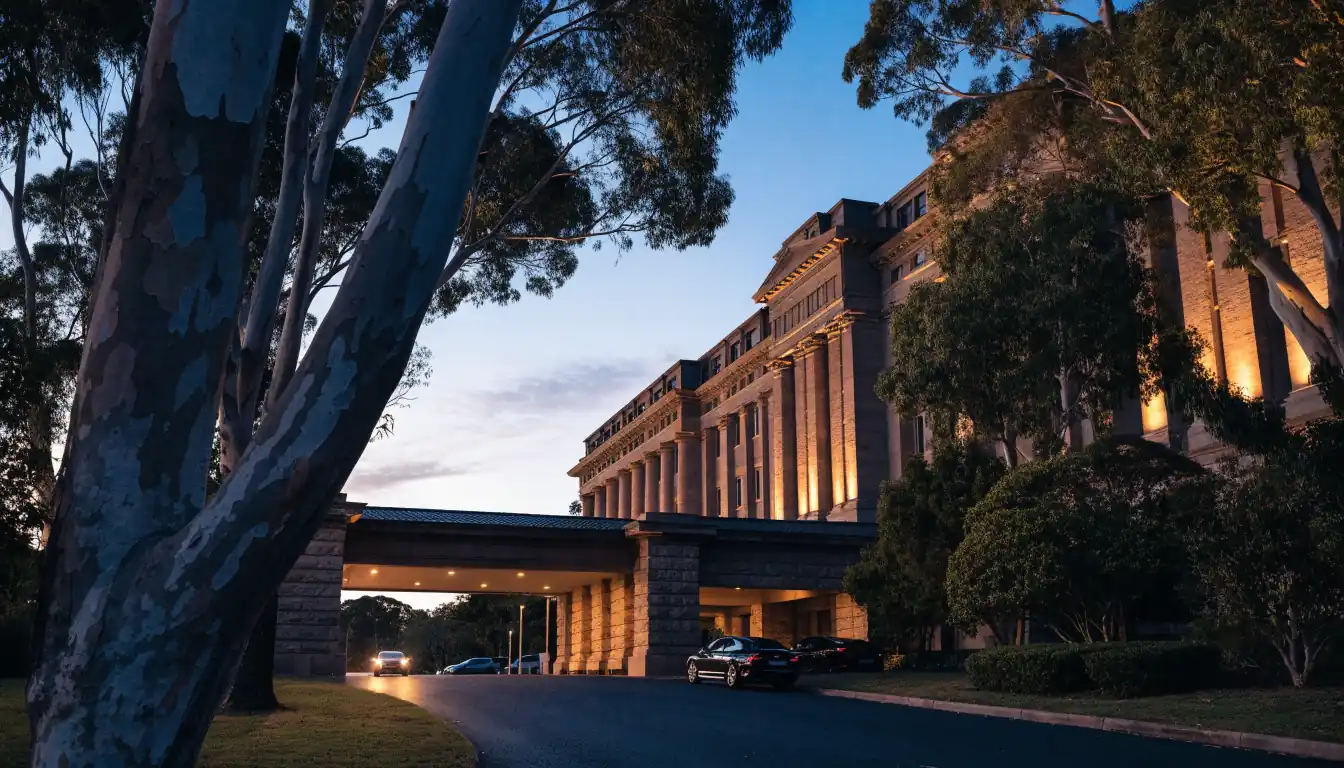
A “casino hotel” can mean a hotel attached to a casino, accommodation operated by the same business, or simply a hotel promoted as being near a casino. Those are different arrangements. The label, by itself, does not establish where a property is, who operates it, or whether guests have access to casino facilities. For a stay in Tasmania, those details need to be confirmed for the specific property rather than inferred from the wording of an offer.
The same distinction matters when comparing rooms. A room sold by a casino operator may be on the venue’s site, while a nearby hotel may be an independent business with no operating connection to the casino. “Near” is not a measure of walking time, transport access or physical attachment. I would treat each as a separate question and look for a property address, a clear description of its relationship to the venue, and the room details attached to the booking.
A deal needs the same scrutiny. The word “deal” can describe a reduced room rate, a package, or a promotion with conditions. Without the actual offer terms, it is not possible to say what is included, when it applies, or whether a particular stay qualifies. A headline price is not the whole arrangement. The booking page should spell out the dates, room type, cancellation terms, any included extras and any conditions that affect the final cost. If those particulars are not clear, the promotional label does not resolve them.
Choosing an online casino in Tasmania calls for checking the details that matter to you, such as licensing and payment terms. This guide offers a concise reference to the listed operators based on the available information.
WinSpirit Casino
WinSpirit Casino lists a Curaçao eGaming OGL license, number OGL/2024/923/0383, issued by Antillephone N.V. Its minimum deposit is A$30.
DragonSlots Casino
DragonSlots Casino lists licensing from the Curaçao Gaming Authority, with Jumpman Gaming Ltd as the named operator.
Vegaz Casino
Vegaz Casino lists Curaçao license OGL/2024/1335/0780. Its minimum deposit is EUR 20.
Neospin
Neospin lists Curaçao Gaming Control Board license OGL/2023/176/0095, with Hollycorn N.V. named as the operator.
Uptown Pokies
Uptown Pokies is described as operating since 2017 under a Curaçao license. Its minimum deposit is A$20.
7Bit Casino
7Bit Casino is listed as Curaçao-licensed and operated by Dama N.V.
SkyCrown
SkyCrown lists a Tobique Gaming Commission license and a minimum deposit of A$30. Its stated payout times are around 10–15 minutes for crypto and 1–5 days for fiat.
Kingmaker
Kingmaker lists a minimum deposit of A$30. Its stated payout times are around 90 minutes for crypto and 1–5 days for fiat.
MrPacho
MrPacho lists a minimum deposit of A$30. Its stated payout times are 30–120 minutes for crypto and 24–72 hours for fiat.
GoldenCrown
GoldenCrown lists Curaçao Gaming Control Board license OGL/2023/176/0095, with Hollycorn N.V. named as the operator.
This is where the distinction between an on-site stay and a hotel nearby becomes practical. An on-site room may be part of the venue’s own accommodation operation; a nearby property may simply be a separate place to sleep. Neither description guarantees a better stay. It changes what needs checking: who takes the booking, who handles changes, and which business is responsible for the room. I would not assume that a casino booking includes accommodation, or that a hotel booking includes anything at the casino.
There is also a difference between a hotel being in Tasmania and being close to a casino. A broad location description cannot establish the distance between the two. For that, the property’s address and a route between the hotel and venue matter more than promotional shorthand. If travel arrangements are important, the route and transport options should be checked independently rather than treated as part of a room offer.
Opening hours are a separate issue from hotel availability. A room booking does not establish when a casino is operating, and a venue’s operating status does not establish that rooms are available. These details can change on different schedules and may be handled by different departments. Keeping them separate avoids a common booking mistake: treating one confirmation as proof of the other.
 Casinos in Victoria: Hotels, Gaming and DiningExplore how casino hotel searches differ from confirmed room offers, alongside poker, dining, accommodation and online casino queries in Victoria.
 Western Australia Casino Guide: Hotels and SearchesLearn how rooms at a casino-associated property differ from nearby accommodation, and why deal terms need checking against dates and booking conditions.
For anyone comparing a casino hotel in Tasmania with other accommodation, the useful record is straightforward: the property’s name and address, the room being booked, the operator taking payment, the complete terms, and any stated connection to the casino. Those particulars allow an on-site option to be distinguished from an independent hotel nearby without relying on the label.
I have seen promotional wording do a lot of work while leaving the operating arrangement unsaid. The test is not whether “casino hotel” appears in the description; it is whether the booking identifies the actual accommodation and its terms. Until that is clear, no particular Tasmanian room, hotel deal or on-site arrangement should be assumed. A name is not a booking.
A poker room and a room containing electronic gaming machines are not the same thing. The distinction matters in Tasmania, where a search for casino poker can otherwise lead to assumptions about a dedicated table-game space, scheduled tournaments or particular facilities. A venue name, an old listing or a general description of a casino does not, by itself, establish that poker is currently offered there.
Poker tournaments require more than a poker table. They depend on an organiser, a format, entry conditions and a confirmed schedule. Those details can change, so an event title without a current date and venue confirmation is not enough to plan around. I treat “tournament” as a separate claim from ordinary poker availability: a venue could offer one without the other, or neither. The wording of a listing is not the event.
Attention: A venue name or general description does not establish that poker is currently offered or that specific tournaments are scheduled. Always verify current dates and venue confirmation independently.
The same care applies to “casino rooms”. That phrase might mean accommodation, a gaming area or a private function space. It does not identify a particular room or tell anyone what happens inside it. Here, the useful distinction is between a place to stay and a place where gambling takes place; the two should not be conflated simply because both are described as rooms.
There is also a terminology trap. In Australia, “pokies” commonly means electronic gaming machines, also called EGMs. Poker played at a table is a different activity. NSW illustrates the difference in regulation and venue language: the state has mandatory pre-commitment for poker machine play, and the legal age for that form of gambling there is eighteen. Those are NSW rules, not a basis for describing a Tasmanian poker room or its entry conditions.
A NSW comparison can be useful only within its limits. Club Liverpool has more operational poker machines than any other club in that state. That fact concerns machines at NSW clubs; it says nothing about table poker, tournament schedules or casino facilities in Tasmania. Similar-sounding terms can conceal very different products. Small distinction. Real consequence.
A sports bar is another separate facility, not evidence of a poker room or tournament. The label may describe a venue area, but it does not establish what screens, games or services are available, or whether the space is open at a particular time. Likewise, a general “casino rooms” listing should not be read as confirmation of a bar, poker tables or any other specific amenity. Each claim needs its own current confirmation.
 Casino in Adelaide: Hotel, Dining and Visit GuideSeparate an accommodation listing from the gaming venue, then compare booking terms and practical details alongside dining, parking and nearby stays.
 Perth Casino: Hotels, Dining and Visitor InformationLearn what a Perth Casino search can establish, and what needs checking, with guidance on accommodation, facilities, dining and online casino limits.
Searches asking whether a Tasmanian casino is open now or open today are time-sensitive. A static page cannot reliably settle that question: opening status may depend on the date, the venue and the particular area being asked about. A casino’s general operating status would not necessarily confirm that a poker room, tournament or sports bar is operating at that moment. “Open” is not a schedule.
For a practical decision, the key is to verify the exact activity and the date rather than rely on a broad venue label. Poker tables, tournaments, electronic gaming machines and a sports bar are not interchangeable offerings. I would keep them separate in any comparison, and treat an unqualified claim about “poker” as incomplete until it identifies which kind of poker and what is actually scheduled.
Parking and dining are practical parts of planning a casino visit, but they do not establish which Tasmanian venue is the best choice. A page labelled “best casino in Tasmania 2026” can sound like a verdict; the useful test is whether its claims about the venue can be checked, rather than whether the wording is confident.
Parking searches may mean very different things: whether a car park exists, whether it is free, or whether valet service is offered. Those are separate conditions, not interchangeable perks. I have seen “easy parking” used as if it settled all three. It does not. A free car park, if available, is not the same as valet parking, and neither phrase says whether spaces are available at a particular time. Without current, venue-specific details, none should be presented as a confirmed feature.
A free car park is not the same as valet parking, and neither phrase confirms space availability at a particular time.
Dining needs the same distinction. A casino may be associated with food without every dining option being on the casino premises or available during a particular visit. General references to “dining” do not establish what is served, where, or when. That is operational information, not a quality rating. Keep it separate from the venue’s gaming offer.
“Bingo” can also appear alongside casino-related searches, but the word alone does not confirm that a Tasmanian casino runs bingo. A similarly named activity or a result linked to another organisation is not proof of an on-site offering. The same rule applies to parking and food: association is not confirmation.
The online-casino search is a different matter from planning a visit to a physical venue. Under the Interactive Gambling Act, operators based in Australia are restricted from providing online casino games such as pokies, blackjack and roulette to people in Australia. That is a rule about the operator’s service, not a claim that a land-based casino visit and an online account are the same activity.
Offshore platforms occupy a different legal position, but that does not make them Australian-regulated services. The legal position is often described as a grey area for players; the important practical distinction is that an offshore platform is not regulated under Australian law. A familiar game title or polished website does not change that. Nor does it provide the protections associated with an Australian regulatory framework. Different jurisdiction. Different safeguards.
I have found that promotional language blurs these distinctions. “Available to Australians” may describe a website that can be reached, not a service authorised or regulated in Australia. “Casino online” can also lead to pages about physical venues, games, or offshore operators, each with a different meaning. The label is not the licence, and access is not oversight.
For a visit to a Tasmanian casino, parking and dining claims should be treated as venue-specific logistics, not as proof of a casino’s overall standing. For online play, the key point is regulatory: Australian-based operators are prohibited from offering these real-money casino games to people in Australia, while offshore platforms are outside Australian regulation. Keeping those questions separate prevents a search for local convenience from turning into an assumption about online legality.
A place to stay near a casino is not necessarily part of the casino, operated by it or covered by a casino promotion. I keep those distinctions separate. A booking listing may use a casino as a landmark because it is a recognisable destination; that wording alone does not establish a partnership, shuttle service, guest benefit or special rate.
For accommodation in Tasmania, the useful comparison is practical rather than promotional: the property’s confirmed address, the route to the intended venue, transport options, check-in arrangements and the full booking conditions. “Near” can mean different things depending on the route and how a guest plans to travel. A map pin is a starting point, not proof of walking time, parking access or a convenient late-night return.
I have seen “casino accommodation deals” used as a broad label for offers that may have little to do with staying overnight. The price can depend on dates, room type, cancellation terms and what is actually included. A discount headline does not establish that a room is available, that the rate applies to the required dates or that any gaming-related benefit comes with it. Read the booking terms as a separate agreement from any casino offer.
That separation matters when a promotion is described as a package. The lodging provider sets the room conditions; a casino, if involved, sets its own conditions. A guest should not assume that a promotion includes accommodation merely because both names appear together, or that a booking earns a casino benefit. The written terms need to identify the participating businesses and explain what the offer covers.
The same discipline applies to location and transport. Before committing to a stay, confirm the property address with the accommodation provider and check the intended route independently. If driving, verify parking arrangements with the property rather than inferring them from a nearby venue’s facilities. If arriving late, confirm check-in availability directly. These are small checks, but they address the points most likely to disrupt a short stay.
Casino opening times, gaming-machine availability and trading hours are separate from accommodation arrangements. They do not establish that a nearby property is open for check-in, nor do they guarantee transport or parking. I would not treat a search result that combines those terms as evidence that the services are linked. Different operator, different terms.
There is also a difference between a genuine lodging offer and a general casino promotion. A promotion may be tied to play or subject to conditions that do not alter the room rate. Any offer involving gambling should be assessed on its stated terms, not as a reason to book a stay or as a way to offset travel costs. The accommodation decision should stand on its own.
For a Tasmania casino visit, the sound approach is to confirm the lodging details with the accommodation business and any claimed casino benefit with the casino itself before paying. If the connection, price or inclusions are not clearly stated, treat them as unconfirmed. That is less glamorous than a package headline. It is also clearer.
A phone number, map pin or event listing can look more definite than it is. In venue operations, these details are only useful when they lead to the right place and remain current. I would treat a directory entry as a starting point, not confirmation: an old listing can survive after a number, entrance or service has changed.
For contact details, the key distinction is between a general business line and a number intended for a particular department. A booking enquiry, lost property matter and question about table games may need different handling. Unless a number is published by the venue itself and its purpose is clear, repeating it risks sending calls to the wrong desk. The same applies to email addresses and contact forms. A page that carries a venue name is not automatically an official channel.
A request for baccarat or craps information is not proof that either game is offered at a Tasmanian venue. These are distinct table games, and names appearing in a directory, a general casino guide or an old photograph do not establish current availability. The practical details that matter are whether the game is operating, where it is located, and whether its rules or access conditions are published by the venue.
Legal Warning
Under the Interactive Gambling Act, Australian-based operators are prohibited from providing online casino games such as pokies, blackjack, and roulette to people in Australia.
I have seen how a broad label such as “table games” can conceal important distinctions. It may describe a category, not a confirmed list of tables. That is the useful check. No guesswork.
A bar search calls for a venue-specific answer: its name, location, service arrangements and current trading information. Without a current official listing, even a plausible-sounding bar name would be an invention. General directory pages can also blur the difference between a bar inside a casino, a nearby business and a separate venue sharing the same area.
Car-park information has a similar problem. A map may show a parking area nearby without establishing that it belongs to the casino, is available to patrons or provides access to a particular entrance. A pin is not an access plan. Directions should be checked against a current venue map or official travel information, especially where the map does not identify the entrance clearly.
Concert listings change more quickly than permanent venue details. A past event page can remain visible after its date has passed, while a listing on an events calendar may refer to a nearby venue rather than the casino itself. A dependable event notice needs to identify the venue and the event date clearly, and ideally link to the organiser or venue’s own information. Without that, a title alone is not enough to establish where a performance takes place.
 Brisbane Casino Accommodation: Hotels and Nearby StaysLearn how to distinguish rooms within a casino complex from nearby hotels, and what to verify about the property, booking and venue…
 Melbourne Casino Guide: Hotels, Dining and Venue DetailsUnderstand how casino hotel offers differ and what to check in room rates, dates and cancellation terms, alongside searches for dining, events…
The same standard applies to contact numbers, game details, bar listings and parking directions: separate an official, current venue statement from a third-party description. That keeps a useful answer from turning a search result into a promise.
Breakfast and buffet questions look like simple menu checks, but the wording can blur several different things: a restaurant’s morning service, a hotel package, and food served as part of a casino visit. Those are separate arrangements. A buffet breakfast is not established merely because a venue is described as a casino resort, and the word “resort” does not confirm that breakfast is included with a stay.
I have seen the distinction matter at the counter. A guest may arrive expecting a meal because a booking page or promotion used broad hospitality language, while the actual offer applied to a particular package or service period. The practical details are the ones that settle it: whether breakfast is served, where it is served, what days it runs, whether it is included or separately charged, and whether a buffet is actually offered. Without current venue information, none of those details can responsibly be stated for a Tasmanian casino.
“Rewards” can create a similar impression of certainty. The word might describe a loyalty scheme, a member offer, or a promotion, but it does not by itself establish that a programme operates at a particular venue or that meals are included. Terms determine what a benefit covers and who can use it. A breakfast discount, if one is advertised, should not be assumed to apply to every guest or booking.
Keep the categories separate. A casino resort is a description, not proof of a particular breakfast service; buffet breakfast is a specific food format, not a synonym for any morning meal. Before making plans around either, rely on current information issued by the venue and confirm the applicable date and conditions. Old listings and copied promotional text can outlast the offer they once described. The wording may remain; the service may not.
Jobs are a different question altogether. Searches for casino work may reflect interest in gaming-floor roles, food service, hotel operations, cleaning, security, administration or management. These are common functions across hospitality businesses, not confirmation that any Tasmanian casino is recruiting for them. An employment search should be treated as a request for a live vacancy, not evidence of one.
From the employer’s side, a job title rarely tells the whole story. The posting needs to identify the employer, location, duties, required experience and employment conditions. Food-service work and gaming operations are not interchangeable simply because they may sit under one venue brand. Recruitment pages can also remain indexed after a role closes, so the closing status matters as much as the title.
I would separate the work into two checks: first, whether the meal or role exists now; second, what exact terms apply. That avoids treating a broad label as a promise. No assumptions.
An opening-hours check is a question about a specific venue on a specific date. A general label such as “open” can conceal the difference between a casino operating routinely, a temporary closure and a planned reopening. I have seen how easily those states get blurred in promotional copy: a future plan is described with the confidence of a current service. They are not the same thing.
 Canberra Casino: Hotels, Rules and Nearby StaysLearn how to distinguish an on-site casino hotel from a nearby stay, and assess searches for poker, online games, dining and venue…
 Hobart Casinos: What Venue Details Are ConfirmedLearn how to distinguish table poker from pokies and which venue details remain unverified, including accommodation, dining and on-site facilities.
A reopening claim needs a date and a clear indication that the venue has resumed operation, not simply that a proposal or announcement exists. Development language needs the same care. A project being discussed, approved or built does not establish that its facilities are available to the public. The useful distinction is between what has been announced and what is actually operating. Until those are connected by a current, attributable update, the wording should stay cautious.
Events have their own timing problem. A past concert or entertainment listing shows that something was scheduled then; it does not establish a current programme or a regular calendar. A dated announcement is more useful than a general promise of entertainment, and a cancellation or venue change can make an old listing misleading. For a review, that matters: an account of a visit records a particular experience, not necessarily the venue’s present hours, events or services.
Employment information also changes with the state of a development. A project announcement is not evidence of open roles, and a general careers page is not confirmation that a particular position is available. The distinction between future staffing plans and current vacancies is worth keeping intact. No leap from one to the other.
Menu searches are similarly time-sensitive, but a menu belongs to the food and restaurant question rather than proving that a casino is open or hosting an event. A published menu can be old, apply to one outlet, or reflect a service period that has changed. It should not be treated as a venue-wide operating notice.
"Coming soon" is not an opening confirmation, and "entertainment available" is not a specific event listing.
When assessing a review of a Tasmanian casino, I look for the date, the specific place being described and whether the writer reports an observed visit or repeats an announcement. Those details help separate experience from expectation. “Coming soon” is not an opening confirmation; “entertainment available” is not an event listing.
The practical standard is simple: operating status, development progress and event schedules are separate claims, each needing current confirmation of its own. Promotional language can make them sound interchangeable. They aren’t.
A restaurant described as part of a casino may be inside the gaming complex, attached to it, or simply marketed as nearby. Those distinctions matter: a listing can create an association without showing that the restaurant is operated by the casino or even shares its opening hours. I treat “casino dining” as a label to check, not a guarantee of a particular venue or arrangement.
For Tasmania, the useful question is whether a named restaurant is currently operating at the casino itself. A restaurant name, location and current menu should appear together in the venue’s own information before they are treated as a confirmed offering. Older directory entries, travel posts and copied listings can remain online after details change. A familiar name alone is not enough.
Menus also need to be read as practical documents, not just promotional ones. A menu can indicate the style and range of dishes, but it does not settle whether every item is available at a particular service, whether the menu has changed, or whether a booking is needed. I have seen the word “signature” do a lot of work in hospitality copy. In practice, it says little about what is served on the day.
The same care applies to pricing and dietary information. A published menu may help establish the listed dishes and prices, while specific dietary requirements still need confirmation with the restaurant. That is not a special casino rule; it is the difference between general marketing copy and information that can support an actual dining decision. Clear details beat polished adjectives.
Restaurants near a casino are a separate category from restaurants at one. Proximity does not establish ownership, access, shared services or a relationship with the gaming venue. A map pin or a “nearby” label can be useful for orientation, but it should not be mistaken for proof that a restaurant forms part of the casino.
I would also separate a restaurant listing from claims about the broader venue. A casino name attached to a dining result does not, by itself, confirm a restaurant’s current status, service format or booking arrangements. Those details are best checked against the restaurant’s own current listing, with the casino’s official information used to confirm the connection when that connection matters.
That distinction keeps the search focused: identify the restaurant, establish whether it is actually on site, then rely on current menu and booking information rather than an old description. No flourish required. Just the details.
A casino address looks like a simple fact, but it is easy to attach the wrong one to a venue. A brand name, a hotel, an entertainment complex and the casino entrance may be described separately. I treat an address as useful only when it identifies the actual venue and makes clear which entrance or building it refers to. A map pin alone can be misleading if it marks a wider precinct rather than the casino itself.
The same care applies to a day spa. A spa mentioned in connection with a casino may be a separate business, a hotel amenity or a facility operated elsewhere in the same precinct. Those are different arrangements, with different access and booking conditions. The word “resort” can make a collection of nearby services sound like one package. It is not one.
Dress-code information also needs a little context. A policy can differ between gaming areas, restaurants, bars and special events, so a broad phrase such as “smart casual” may not settle what is permitted at a particular entrance. Restrictions can cover footwear or clothing, and a venue may apply them at its discretion. The practical point is to check the policy attached to the specific space and occasion, rather than treating an old listing as a standing rule.
That is where promotional language tends to blur things. “Relaxed” may describe the atmosphere, not the entry conditions. “Luxury spa” is a description, not evidence of what treatments, facilities or access arrangements are available. I separate the label from the service: who operates it, where it is, what needs booking, and whether casino access is actually part of the arrangement. Small distinctions. Real consequences.
Bars and games are separate venue details, not clues that establish an address, spa facility or dress code. A listing for one does not confirm the others, and a broad casino description should not be read as a complete inventory. The same applies to career information: it belongs to employment channels, not to a visitor’s assumptions about what the venue provides.
For a Tasmania casino visit, the useful sequence is straightforward: identify the specific property, confirm the location and entrance, then check the relevant facility’s own access terms. Dress expectations should be checked for the area being visited. Spa services should be treated as a separate booking unless the venue expressly says otherwise. No guesswork from branding.
Food facilities and a pool are separate venue features, even when they appear together in a broad description of a casino. A food court suggests several food outlets sharing an area; it does not, by itself, confirm what is served, when outlets operate or whether they are part of the casino. Likewise, a pool may belong to a hotel or another nearby business rather than the casino premises.
I learned to treat amenity labels as a starting point, not a complete description. “On-site” can sound straightforward, but the practical distinction is whether a facility is inside the casino, attached to it, or simply nearby. That matters when planning a visit: a listing that groups food and leisure options around a venue does not necessarily mean those facilities are available to casino guests or open at the same time.
For Tasmania, the name of a casino alone is not enough to establish that it has a food court or pool. Those details should be confirmed through current venue information before they are treated as part of the visit. A general reference to food also cannot stand in for a specific facility: a café, a restaurant and a shared food area are not interchangeable descriptions.
The same care applies to pool access. A photograph or accommodation reference may suggest a leisure facility, but it does not confirm who can use it or whether access is included. Those are operational conditions, not decorative details.
Keep the categories distinct. Food service describes where meals or snacks may be obtained; a food court describes a particular layout; a pool is a separate amenity. Marketing language can blur the edges. The useful question is what the venue itself explicitly identifies, rather than what a broad label seems to imply.
No assumptions. Just the facility stated.
Region blocking uses your IP address to estimate your location and can prevent games or providers from appearing or loading in countries they exclude. Some providers block games for Australian players because of licensing requirements or in anticipation of possible changes to Australian gambling laws.
Free-spin winnings commonly carry wagering requirements of 20x to 50x, and pokies typically count 100% toward those requirements. The stated requirement for free-spin winnings is 30x before withdrawal.
Check the game's RTP, which is its theoretical payout percentage over a very large number of spins. Each spin is independent and generated by an RNG, so previous results do not affect the next spin.