A practical guide to distinguishing casino accommodation from nearby hotels and researching dining, parking, entertainment and other venue details.
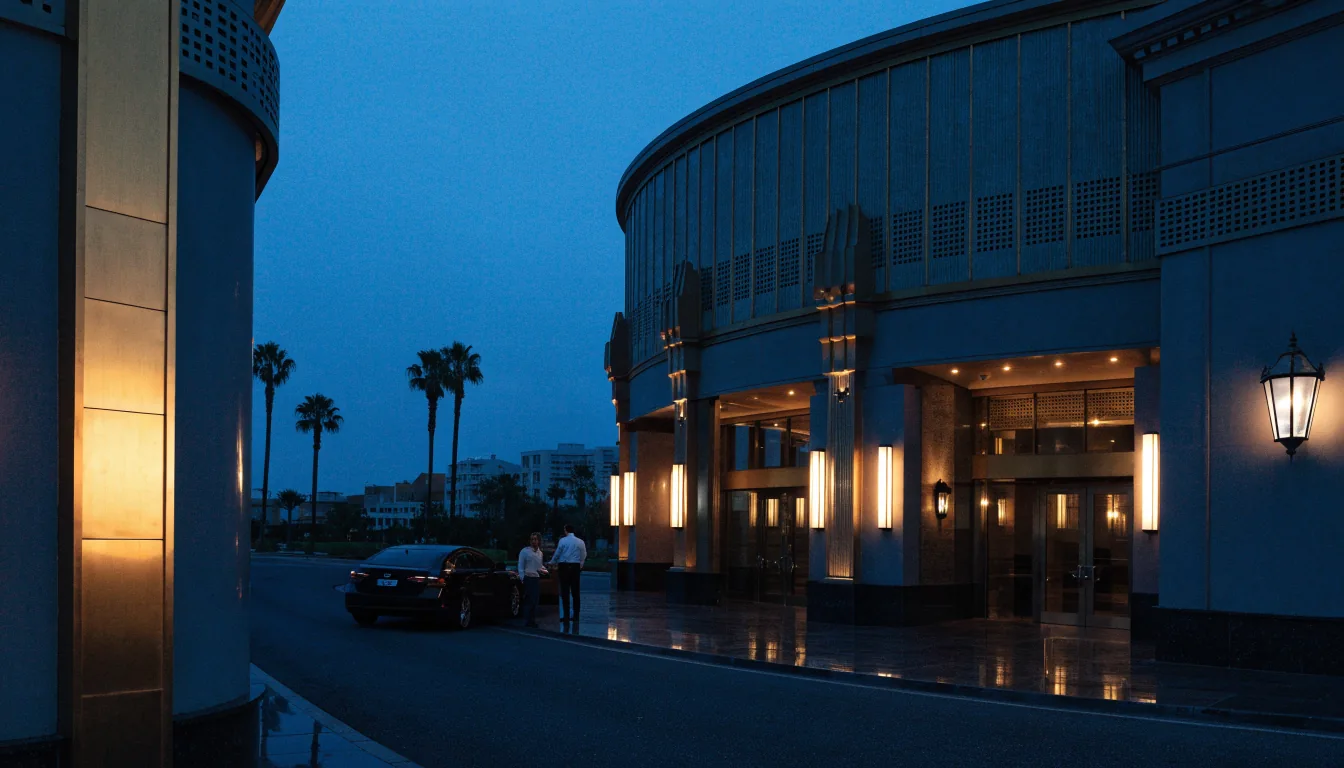
A search for a casino hotel in Adelaide can mean two different things: a room inside the casino complex, or a hotel chosen because it is close to the venue. Those are not interchangeable. The first question is whether the casino itself offers accommodation; the wording of a search, or a booking page’s use of “casino hotel”, does not establish that it does.
I treat the room as a separate product from the gaming venue. Before comparing prices, the useful checks are whether the accommodation is operated by the casino, whether it is physically part of the same complex, and what the booking actually includes. A nearby hotel may use the casino as a landmark without having any formal connection to it. That difference matters when a package is described as a “casino stay”: the phrase can suggest access or convenience that the terms do not promise.
A credible listing should identify the property, describe the room category and set out the booking conditions before payment. The practical details are ordinary hotel details, but they determine whether a quoted rate is genuinely suitable: arrival and departure rules, cancellation terms, included services, taxes or other charges, and whether the stated price applies to the selected dates. If any of these are unclear, the headline rate is not enough to compare.
Choosing an online casino while looking for options in Adelaide calls for checking the details that matter to you, including licensing and payment terms. Use these concise operator notes as a starting point for your research.
WinSpirit Casino
WinSpirit Casino lists a Curacao eGaming licence, OGL/2024/923/0383, issued through Antillephone N.V. Its minimum deposit is A$30.
DragonSlots Casino
DragonSlots Casino lists a Curacao Gaming Authority licence and is operated by Jumpman Gaming Ltd.
Vegaz Casino
Vegaz Casino lists a Curacao OGL/2024/1335/0780 licence. Its minimum deposit is EUR 20.
Neospin
Neospin lists a Curacao Gaming Control Board licence, OGL/2023/176/0095, and is operated by Hollycorn N.V.
Uptown Pokies
Uptown Pokies has operated since 2017 and lists a Curacao licence. Its minimum deposit is A$20.
7Bit Casino
7Bit Casino is operated by Dama N.V. and lists a Curacao licence.
SkyCrown
SkyCrown lists a Tobique Gaming Commission licence. Its stated payout times are around 10–15 minutes for crypto and 1–5 days for fiat; the minimum deposit is A$30.
Kingmaker
Kingmaker states payout times of around 90 minutes for crypto and 1–5 days for fiat. Its minimum deposit is A$30.
MrPacho
MrPacho states payout times of 30–120 minutes for crypto and 24–72 hours for fiat. Its minimum deposit is A$30.
GoldenCrown
GoldenCrown lists a Curacao Gaming Control Board licence, OGL/2023/176/0095, and is operated by Hollycorn N.V.
I would also separate accommodation inclusions from casino benefits. A room reservation does not, by itself, establish that meals, gaming credit, event entry, or other extras are included. Those claims need to appear in the actual offer and its conditions. “Exclusive” is marketing language; the operative detail is what the booking confirms, and what happens if plans change.
For a supposed deal, compare the complete payable price and its restrictions rather than the discount label. Check whether the offer is limited to particular dates, room types or booking channels, and whether cancellation is permitted. A lower non-refundable rate may be the wrong choice when travel arrangements are uncertain. The fine print is the product.
Casino opening hours and hotel access hours answer different questions. A venue’s gaming floor schedule does not establish when hotel reception operates, when a guest can check in, or whether a room can be accessed outside standard arrival times. Likewise, a hotel’s reception arrangements say nothing by themselves about casino operations.
For current venue hours, use the casino’s own published information and check the specific area or service relevant to the visit. Hours can change, and a general listing may not cover every part of a complex. The same applies to a reservation: its check-in details belong to the accommodation provider, not to the casino’s general opening schedule. Keep the two checks separate.
Searches for an Adelaide casino hotel often imply that a room is available on site. That implication should be confirmed directly before a booking is made. If no clearly identified casino-operated accommodation appears in the official venue information, a listing described as “near the casino” should be understood as a separate hotel unless its relationship is stated plainly.
The useful comparison is therefore not simply “casino hotel versus ordinary hotel”. It is a confirmed on-site stay, if offered, versus an independent property selected for its location. Verify the property name and address, the room terms and the relevant opening or check-in information through the responsible operator. A polished package page can make the distinction look smaller than it is. The booking terms settle it.
The phrase “poker room” can mean a dedicated area for live poker, a table operating within a larger venue, or simply a place where poker is played. Those are not interchangeable descriptions. I have seen venue language blur them, while the practical difference matters: a dedicated room suggests a regular poker setting, but does not by itself establish that cash games or tournaments are running on a particular day.
For Adelaide Casino, the presence, format and timetable of poker should be confirmed through current venue information before making plans. A tournament listing needs more than a date: registration arrangements, starting time, game format and entry conditions determine whether it suits a player. Those details can change, and a general reference to poker is not proof that a scheduled tournament is available. No guesswork.
The same caution applies to searches for casino rooms. In this context, “rooms” may refer to accommodation, which is a separate matter, or to a room within the venue. It should not be read as confirmation of a poker room. The casino’s current descriptions and event notices are the useful distinction; old listings and copied schedules can outlast the arrangements they describe.
Live poker at a venue is also different from online poker. The Interactive Gambling Act 2001 prohibits operators from providing real-money online casino games, including poker, to people physically in Australia. That restriction concerns online services, not a claim that a physical venue offers a particular poker format. A website offering online poker to Australians is not made lawful merely by describing itself as offshore or licensed elsewhere.
Poker should not be confused with pokies either. Poker is a game involving players and, where available, a table format; pokies are Electronic Gaming Machines (EGMs). Their rules, access arrangements and venue information are different. For EGM gambling, venues check identification, and ignoring applicable age or entry requirements can have legal consequences. The NSW age rule does not establish Adelaide’s rules: it belongs to another state and should not be carried across as if it applied locally.
A search for a sports bar at the casino points to another possible source of confusion. A sports bar is not evidence of a poker room, and a poker listing does not confirm that a bar is open. Opening status is time-sensitive. “Open today” or “open now” cannot establish that poker is being dealt, that a tournament is running, or that a specific area is accessible. Those are separate facts to verify through the venue’s latest information.
From the operational side, tournament details are conditions, not decoration. Registration windows, seating and late-entry rules shape the actual experience; a headline announcing a tournament does not answer those questions. I would treat an undated listing as a lead, not as confirmation. If the venue does not publish the relevant details, the sensible conclusion is that the schedule remains unconfirmed.
That is the useful way to read searches for poker at Adelaide Casino: establish whether the interest is live poker, a scheduled tournament, an EGM, or a separate bar or accommodation question, then check the current venue information for that exact subject. A name on a page is not a timetable.
A casino’s public role is wider than gaming. It can function as an event venue and a large operating business, but those descriptions do not establish what is scheduled, which spaces are available, or whether a particular part of the property is open. I keep those questions separate. A venue can be operating while a room, attraction or event space is temporarily unavailable.
That distinction matters when checking whether Adelaide Casino is open or has reopened. “Reopened” may refer to the return of a specific facility after a closure, rather than the reopening of the whole venue. A headline or old event listing can remain visible after circumstances have changed. For a visit tied to a particular performance or function, the useful evidence is a current venue notice or the event organiser’s own update, not an assumption drawn from the general status of the casino.
"Reopened" may refer only to a specific facility within the complex rather than the reopening of the entire venue.
Event programming changes over time. A calendar may include activities organised by the venue as well as events promoted by outside organisers, and the responsibilities for updates can differ. The practical details to establish are the event date, the location within the venue, entry arrangements and any change or cancellation notice. Those are event-specific conditions, not reliable indicators of what the casino offers every day.
The word “entertainment” is broad. It can describe scheduled performances, public events or other activities, but it does not tell a visitor what is happening on a particular date. I would treat a general description as a category, not a promise of a programme. The calendar is the working document. Check the event itself.
For Adelaide, the casino’s role in the city is therefore best understood as a combination of gaming operations and public-facing activity, with the balance depending on current programming. Events can bring different audiences into the building and give the venue a civic presence beyond its core business. That does not make every event a city-wide attraction, nor does it mean every part of the venue participates.
Development can refer to construction, refurbishment, changes in how space is used, or a broader business plan. These are not interchangeable. A proposal is not a completed project; an announcement does not establish a timetable; and work in one area does not, by itself, mean the entire venue has closed. The distinction is plain, but promotional language often blurs it.
When a change affects visitors, the useful questions are concrete: what area is affected, whether access has changed, and whether the change is temporary or lasting. Without a current notice, it is not sensible to attach a particular project, reopening date or development outcome to the Adelaide venue. Claims of “transformation” need specifics. Otherwise, they are just labels.
The same care applies to employment. A major venue may support a range of operational functions, but a general statement about its role as an employer does not establish that vacancies are available or describe current conditions. Recruitment information belongs in a current listing, where role requirements and application details can be checked directly.
From the inside, the pattern is familiar: the public sees a single destination, while operations are divided among spaces, teams and schedules. That is why a broad description can be accurate yet still fail to answer whether a particular event is on or a particular area is accessible. For planning, current, event-specific information carries more weight than a general impression of the venue.
Parking is a practical part of planning a visit to Adelaide’s casino, but it should not be treated as a guaranteed feature of a booking or ticket. I have seen how easily a search result can blur venue information with third-party listings: a page may mention parking without making clear whether it is on-site, nearby, available to the public or subject to conditions. The useful detail is the current information published by the venue, not an old directory entry.
That distinction matters when comparing the casino with other places in the city. A venue visit involves a physical destination and its own access arrangements. Searches about casino bingo, lunch or dining also refer to on-site experiences, where availability and entry conditions should be checked against current venue information. None of that establishes that an online casino service is available to people in Adelaide.
Lawful Access
Under the Interactive Gambling Act 2001, operators in Australia cannot lawfully provide real-money online casino games to people physically located in Australia.
The phrase “online casino Adelaide” can sound like a digital extension of the local venue. It is not. Under the Interactive Gambling Act, operators based in Australia cannot offer online casino games such as pokies, blackjack and roulette to people in Australia. An Australian-run online casino therefore cannot lawfully provide those services to local players. A casino’s physical presence in Adelaide does not change that rule.
There is a separate technical issue with offshore websites: access to particular games can depend on the player’s location. Online casinos may use an IP address to estimate the country from which someone is connecting, then block games or providers for people in excluded regions. The result can be a game missing from a lobby or failing to load. A familiar brand or game name does not guarantee availability from an Australian connection.
A VPN can make a connection appear to come from another country, but using one to reach region-blocked pokies sites breaches the site’s terms of service and may lead to account suspension. That is not a parking workaround or a legitimate route into the Adelaide venue. It is a separate online access issue, with separate risks.
The phrase “best casino in Adelaide” is most useful when it means a real venue: how it can be reached, what is open and what arrangements apply on the day. Parking information should be checked close to the visit, because access details can change. Online casino licensing and region controls answer a different question. In Australia, the Interactive Gambling Act restricts operators from supplying online casino games to people located here; a local venue’s licence does not authorise an online version for Australian customers.
Keep the categories separate. A car park belongs to a venue visit; an online casino is a regulated service question, not an Adelaide amenity. The distinction is easy to miss. The law is not.
For a stay near Adelaide’s casino, the useful question is not simply whether a property is described as “close”. That word can mean a short walk, a convenient public-transport connection or merely the same general part of the city. I compare the actual route to the venue with the reason for the trip: an evening visit, an early departure or a stay built around other plans in Adelaide. The label is marketing. The route is what matters.
A map can narrow the options, but it does not settle the practical details. Walking routes may differ from the straight-line distance, and a route that looks simple on a screen may be less appealing late at night or with luggage. Public transport can make a property farther away workable, but its usefulness depends on the journey and the time of travel. I check the route and transport information for the intended dates rather than treating a pin on a map as a promise of convenience.
This is where nearby accommodation differs from staying at the casino itself. The choice is about the surrounding area and how a separate property fits into the visit, not about casino hotel rooms. A cheaper nightly rate can lose its appeal if the trip between the property and the venue adds friction; a higher rate may be justified by location or by other features, but only when those features matter to the stay. “Nearby” is not a verdict. It is a starting point.
Comparing Accommodation
Analyze the route
Compare the actual walking or transport route to the venue rather than relying on map pins.
Verify total cost
Compare the complete payable price, including taxes and charges, instead of the discount label.
Review conditions
Check cancellation terms and date restrictions to ensure the rate is suitable for the travel plans.
The phrase “casino accommodation deals” can also blur distinct offers. A property may advertise a rate for a particular date, while a package may bundle accommodation with something else. Neither should be assumed to include casino entry, gaming credit or any other benefit. I read the actual inclusions, dates, cancellation conditions and booking terms before treating a promotion as a saving. Promotional language is often broad; the conditions do the real work.
I have seen people compare only the headline price and miss the cost of flexibility. A room that cannot be changed may suit a fixed itinerary, while a refundable booking can be worth considering when plans are uncertain. The right comparison is the final price against the terms and the location—not a crossed-out figure beside a “deal” label. Small print matters.
Opening hours and trading hours are venue details, not a measure of whether nearby lodging is suitable. Likewise, searches for gaming machines or poker machines describe what may be available at a gambling venue, not what a surrounding accommodation property offers. Keeping those questions separate avoids booking on an assumption that the lodging itself includes casino facilities.
For a practical shortlist, I would record the property’s location, the route to the casino, transport options, the total booking price and the cancellation terms. Then I would verify each detail with the accommodation provider before confirming. That is less exciting than a promotional headline, but more useful when the stay is actually planned.
Planning a visit involves more than finding a pin on a map. Contact details, access arrangements and event information can change, so I treat the venue’s own website as the reference point rather than relying on an old directory listing. A phone number copied across third-party pages may be outdated or may connect to a general switchboard rather than the team needed for a particular enquiry.
For a direct enquiry, the official contact page is the sensible starting point. It can distinguish general venue questions from requests about an event or a specific service. If a call is necessary, confirm that the number comes from a current official page before using it. That small check prevents a familiar nuisance: reaching the wrong department and having to start again.
A map is useful for orientation, but it does not settle every arrival detail. The venue’s own directions should be checked alongside the map, especially where access points, drop-off arrangements or road conditions matter. I have seen visitors assume that the map pin marks the entrance they need. A pin is not an entrance plan.
Searches for a bar at the Adelaide casino often mean one of two things: finding somewhere to meet before an activity, or checking whether a particular bar will be open when the group arrives. Those are separate questions. A venue listing can establish that a place exists, while current operating information is what matters for a visit. It is better to confirm the latter directly than to build an evening around an old listing.
The same distinction applies to concerts. An event page is the place to check what is scheduled, how tickets are handled and whether entry arrangements differ for that performance. A concert listing is not a guarantee that the same access or timing applies to every event. Keep the event details together with the venue’s directions; that makes arrival planning less dependent on assumptions.
Baccarat and craps searches are another case where a general casino label can be mistaken for a current floor guide. The games’ names alone do not confirm whether a table is operating, what its hours are, or what conditions apply on a particular visit. Those details belong with current venue information, not an old map or an informal post. Check before travelling. Then plans can be made around confirmed details, rather than the game name appearing in a search result.
I separate information into three parts: how to reach the venue, what is happening on the intended date, and which service can answer a specific question. That keeps a concert enquiry from being treated as a general contact request, and avoids assuming that a bar or table is available just because it appears in a broad venue description.
For the car park, use the venue’s current arrival information and any relevant event guidance. A map can show the surrounding streets, but it cannot reliably answer every question about access or entry. If a detail affects the timing of the visit, confirm it through an official channel before setting out. Simple, but effective.
Breakfast and buffet enquiries concern a particular service, not simply the casino’s gaming floor. A search for breakfast at Adelaide Casino may mean a morning meal at the venue; a buffet search asks a different question about dining format. Neither phrase, by itself, confirms that breakfast or a buffet is currently offered. Services can change, and a result that remains visible online may describe an earlier arrangement.
I learned to separate a venue name from a service promise. “Resort” is often used loosely in searches, but it does not establish which facilities are operating or what is included. The practical distinction is between the place people are trying to identify and the specific service they expect to find there. For breakfast or buffet plans, current venue information is the relevant check; an old listing or a broad description is not enough to establish hours, availability or inclusions.
The same caution applies to the word “rewards”. It can refer to a loyalty scheme, an offer, or simply a general expectation that visitors will receive a benefit. The phrase alone does not confirm that a programme is available, who can join, what conditions apply or whether any particular reward is offered. I have seen promotional wording do a lot of work while leaving the operating terms to do the rest. Read the conditions, not just the label.
Jobs are a separate reason to look up the casino. A vacancy is not established by a general jobs page, a third-party listing or an old result carrying the venue’s name. The useful document is a current position description: it identifies the employer, the duties, the location and the application process. If any of those details are missing, the listing may be incomplete or out of date.
That distinction matters because “casino job” can describe very different work, and the search phrase does not specify a department or role. I would not infer that a particular position exists from a general careers page, or treat a past advertisement as evidence of a current opening. A live listing is the test. No listing, no vacancy to assess.
Attention: The name associated with a job listing is not always the legal employer; always verify the named employer in the contract or advertisement.
Applicants also need to distinguish the casino operator from other businesses that may operate at or around a venue. The name associated with a workplace is not necessarily the legal employer named in the contract or advertisement. That is not a technicality: it determines which organisation is offering the role and setting its employment terms. Check the named employer before relying on a listing.
Breakfast, buffet, resort and rewards searches all concern services or benefits whose details need current confirmation. Employment searches require a current vacancy and a clear employer. Keeping those questions separate prevents a broad venue description from being mistaken for a menu, a benefit or a job offer. Details matter.
The Adelaide Casino address is commonly given as North Terrace, Adelaide SA 5000. That identifies the venue; it does not confirm every service or facility associated with it. When planning a visit, the address is the practical starting point, while current entry details and operating information should be checked through the venue’s own channels. Names and facilities can change, and an old listing can remain visible long after the underlying details have shifted.
Dress-code searches need the same distinction between a general impression and an enforceable entry condition. A polished casino setting may suggest formal clothing, but that alone does not establish a particular rule. I have seen how a vague phrase such as “smart casual” can leave people guessing: it sounds decisive, yet means little without the venue’s current wording and any stated restrictions. Check the published guidance before setting out, especially if the visit includes more than one part of the property. No guesswork.
The games question is also best read in context. At a physical casino, “games” can refer to different forms of venue entertainment, not necessarily one specific machine or table. Electronic Gaming Machines (EGMs) are part of the Australian venue vocabulary; online pokies are a separate matter. Under the Interactive Gambling Act 2001, operators cannot provide real-money online casino games to people in Australia. A venue search should not be mistaken for an invitation to use an online casino service.
Spa-related wording is not proof that a day spa operates at the casino. The same applies to searches combining the venue with bars: those terms express an interest, but do not establish what is open, where it is located, or whether access is currently available. I keep the distinction plain. A listing is not confirmation. Check the venue’s current information before relying on a facility name or assuming it is part of the casino.
Career searches belong to a different practical task from identifying the entrance or checking dress expectations. Job availability changes, and a general venue page is not a reliable vacancy notice. For applications, use the official careers information rather than treating an old listing or a third-party result as current.
The useful approach is modest: confirm the address, verify the current entry guidance, and check any specific facility directly. That avoids turning a search phrase into a promise the venue has not made.
Restaurant information is easy to misread when a venue is described simply as a casino. That label identifies the broader destination; it does not tell me which dining venues are operating, what they serve, or whether a listing is current. I separate those questions before treating any restaurant name or offer as dependable.
A restaurant inside the casino and a restaurant near it are not interchangeable. The first belongs to the venue; the second is a location-based option elsewhere. Listings can blur that distinction, especially when maps and directory pages use broad labels. I check whether the restaurant is identified on the casino’s own current channels and whether the details refer to that venue rather than a nearby business. Small distinction. Practical consequence.
The same discipline applies to restaurant names, menus and booking details. A page may remain visible after information has changed, while a search result can show a description without establishing that it is current. I would look for a recent, venue-controlled listing before relying on a claimed menu, opening time, reservation arrangement or special service. If those details are not confirmed, they should not be treated as part of the casino’s offer.
The phrase “dining destination” is promotional shorthand. What matters in practice is whether the particular restaurant suits the occasion: the kind of meal, the timing, the price information and any booking conditions. Those are separate details, not a single promise attached to the casino’s name. I have seen how broad labels can make a venue sound more specific than the underlying information. Read the particulars.
A rooftop bar is also not automatically a restaurant. The words suggest a setting, but they do not establish that food is served, that the venue is open, or that it forms part of the casino’s current dining options. It should be assessed as its own venue category, with its own confirmed details. A rooftop label is not a menu.
For Adelaide casino restaurants, the useful distinction is therefore between what is named and what is verified. A restaurant listing should be tied clearly to the casino, with current details available from the venue itself. Nearby dining belongs in a different search; bar listings need their own confirmation. That approach avoids turning a broad location description into an assumed restaurant recommendation, and keeps expectations aligned with what the venue actually states.
Food searches around Adelaide’s casino can mean several different things: a place to eat within the complex, a quick-service counter, or a dedicated food court. Those are not interchangeable descriptions. A venue may have food available without operating a food court, and the phrase “casino food” does not identify a particular format, opening time or current service.
I separate the broad question from restaurant-specific searches. The former is about whether food is part of a visit and what kind of arrangement is advertised; the latter concerns named dining venues and their details. Search wording alone cannot establish that a food court exists or that every option is open at a particular time. Listings can change, so current venue information is more useful than an old directory entry or an assumption based on the size of the complex.
The pool search needs the same care. “Casino pool” might refer to a facility at the venue, a hotel amenity, or a pool elsewhere that happens to be nearby. Those possibilities describe different services. A hotel’s amenities should not be attributed to the casino floor, and a nearby pool is not automatically part of the casino.
I have seen how broad labels make an offer sound more definite than it is. “On-site” can describe a location without saying who operates the service, whether access is included, or whether it is available to every visitor. The distinction matters.
For Adelaide’s casino, food and pool searches are best treated as requests for separate, verifiable details—not proof that a food court or swimming pool is provided. Current official venue and hotel descriptions can clarify what belongs to the casino, what belongs to accommodation, and what is simply nearby. Until that distinction is clear, neither a pool nor a particular food format should be assumed.
Yes. Australian-run operators cannot offer online casino games such as pokies, blackjack and roulette to people in Australia. Using offshore platforms is technically not illegal for Australian players, but those platforms are not regulated under Australian law.
Club Liverpool has the highest number of operational poker machines among clubs in NSW.
You must be 18 or older to gamble on poker machines in NSW.
NSW uses mandatory pre-commitment systems, requiring players to set a loss limit before playing.